INDUSTRY 4.0 & DIGITAL
Edge Computing in Manufacturing: Where It Actually Helps
Why edge computing and cloud computing work together, and when local processing is worth the added complexity.
Why edge computing and cloud computing work together, and when local processing is worth the added complexity.
Sending every sensor reading to the cloud before
deciding whether a machine should shut down adds a delay that
matters when the decision needs to happen in milliseconds. Edge
computing exists to process data close to where it’s generated,
instead of waiting on a round trip to a data center.
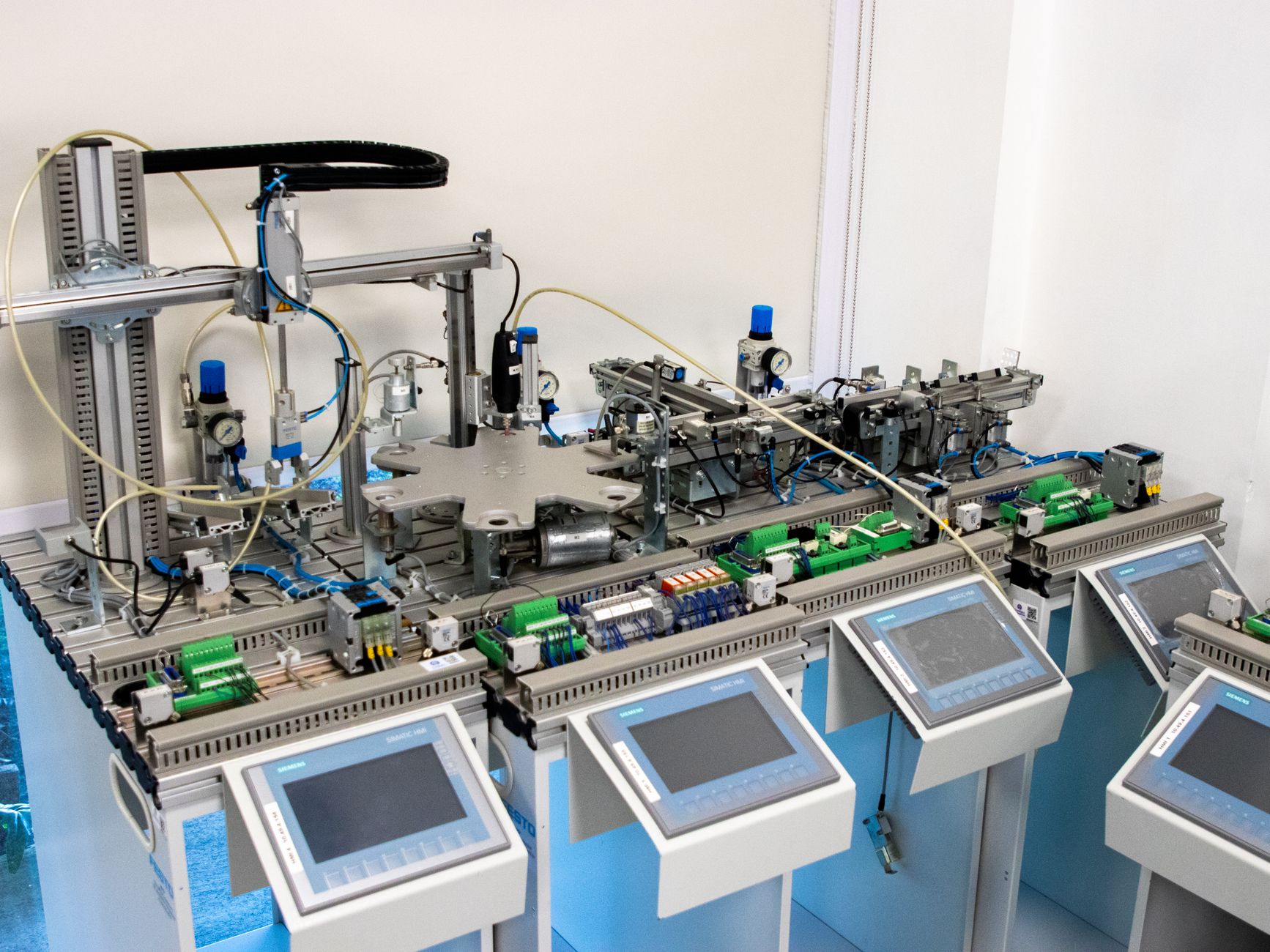
Most industrial deployments use both: an edge device handles
time-sensitive decisions — stopping a machine, flagging an
out-of-spec reading — in real time on the plant floor, while
aggregated data still flows to the cloud for trend analysis,
reporting, and machine learning model training that doesn’t need a
millisecond response.
| Problem | How edge computing helps |
|---|---|
| Latency | Local processing avoids round-trip delay to a remote server |
| Bandwidth | Only summarized or exception data needs to leave the plant |
| Connectivity gaps | Local decisions keep running if the internet connection drops |
A weekly energy consumption report doesn’t need millisecond
processing at the edge — sending that data to the cloud on a
batch schedule is simpler and cheaper. Deploying edge infrastructure
for every data stream, including ones with no real-time requirement,
adds cost and complexity without a corresponding benefit.

An edge device sitting on the plant floor is still a networked
computer, and it needs the same patching, access control, and
monitoring discipline as anything else on the OT network. Edge
devices deployed without that plan become an unmanaged entry point
that a broader cybersecurity program has to account for later.

Edge computing complements the broader connected-manufacturing
fundamentals covered in our related guide on
Industrial
IoT sensors, part of SCMEP’s
Industry 4.0 and Digital
Manufacturing training catalog. As a NIST
Manufacturing Extension Partnership affiliate serving South Carolina
manufacturers since 1989, our focus is matching the architecture
to the actual latency requirement, not deploying edge infrastructure
everywhere by default.
If your team is evaluating where edge computing fits your
connected-plant strategy, you can
browse the Industry 4.0 and Digital
Manufacturing training catalog or email the training team.
No. Most deployments use both — edge devices handle time-sensitive real-time decisions on the plant floor, while aggregated data still flows to the cloud for trend analysis and reporting.
Latency from round-trip delay to a remote server, bandwidth use from sending raw data instead of summaries, and continuity of local decisions if the internet connection drops.
No. Data without a real-time requirement, like a weekly energy report, is often simpler and cheaper to send to the cloud on a batch schedule rather than processing at the edge.
An edge device is still a networked computer and needs the same patching, access control, and monitoring as anything else on the OT network — without it, it becomes an unmanaged entry point.