RoHS & REACH Compliance: Supply Chain Chemical Regulations Explained
A South Carolina manufacturer that never ships directly to Europe can still get pulled into EU chemical regulation, because the part they made ends up inside a product sold there. RoHS vs. REACH, and why smaller suppliers get pulled in anyway.
July 22, 2026 ·
4 min read ·
SCMEP Training Team ·
106 views
Share
A South Carolina manufacturer that never ships a
single part directly to Europe can still get pulled into European
chemical regulation — because the part they made ends up inside a
product a customer sells there. RoHS and REACH are the two rules that
reach furthest down the supply chain to find them.
RoHS: restricting specific substances
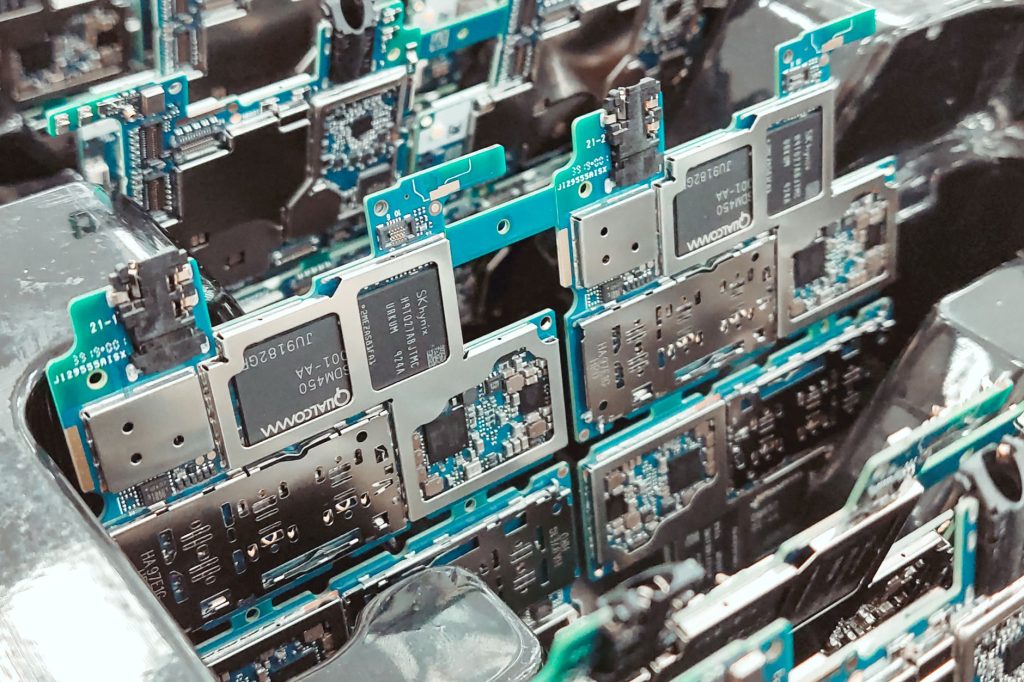
RoHS, the EU’s Restriction of Hazardous Substances directive,
restricts specific substances — including lead, mercury, cadmium, and
hexavalent chromium — in electrical and electronic equipment sold in
the European Union. The RoHS 3 update in 2015 added four phthalates to
the restricted list. RoHS is substance-specific and product-category
specific: it applies to defined categories of electrical and
electronic equipment, not to every manufactured good.
REACH: a much broader net
RoHS vs. REACH
Regulation
Scope
RoHS
Restricts specific substances in electrical and electronic equipment
REACH
Covers essentially all chemical substances manufactured or imported into the EU above one tonne per year, across any product category
REACH, the EU’s Registration, Evaluation, Authorisation and
Restriction of Chemicals regulation, is far broader than RoHS. Its
Substances of Very High Concern (SVHC) candidate list is updated
periodically, and once a substance is added, companies have
communication obligations that flow down the supply chain — meaning a
manufacturer might need to disclose SVHC content in a part even if
they’ve never heard of the specific substance flagged that year.
Why smaller manufacturers still get pulled in
A part supplied to a customer that assembles a finished product for
the EU market carries the compliance question downstream, regardless of
whether the supplying manufacturer ever deals with the EU directly.
Customer declaration-of-conformity requests and supplier questionnaires
are how that question typically arrives — the same purchasing and
quality functions that field conflict minerals requests are usually the
ones fielding RoHS and REACH declarations too. See our related guide on conflict minerals and
Dodd-Frank Section 1502 for a similar downstream disclosure
obligation manufacturers encounter the same way.
Compliance is ongoing, not a one-time certificate
Unlike an ISO certification with a scheduled recertification cycle,
RoHS and REACH compliance is a running due-diligence exercise — new
substances get added to restricted or SVHC lists on their own schedule,
and a supplier declaration from two years ago doesn’t guarantee current
compliance without periodically checking it against the latest lists.
RoHS restricts specific substances, including lead, mercury, cadmium, and hexavalent chromium, in defined categories of electrical and electronic equipment sold in the European Union. RoHS 3, in 2015, added four phthalates to the list.
How is REACH different from RoHS?
REACH is much broader, covering essentially all chemical substances manufactured or imported into the EU above one tonne per year across any product category, rather than being limited to electrical and electronic equipment.
Why do manufacturers who don’t sell directly to the EU still need to comply?
A part supplied to a customer that assembles a finished product for the EU market carries the compliance question downstream, typically arriving as a customer declaration-of-conformity request or supplier questionnaire.
Is RoHS/REACH compliance a one-time certificate?
No. Restricted substance and SVHC lists are updated periodically, so compliance is an ongoing due-diligence exercise rather than a one-time certification with a fixed recertification cycle.
South Carolina Manufacturing Extension Partnership has delivered manufacturing training to South Carolina manufacturers since 1989. Articles are produced and reviewed by SCMEP's training team.