Centerless vs. Cylindrical Grinding: What’s the Difference?
"Centerless" isn't a marketing name — it describes exactly what's missing: no chuck, no spindle, no center at all. Centerless vs. cylindrical vs. surface grinding compared, and how to choose a grinding wheel.
July 22, 2026 ·
5 min read ·
SCMEP Training Team ·
138 views
Share
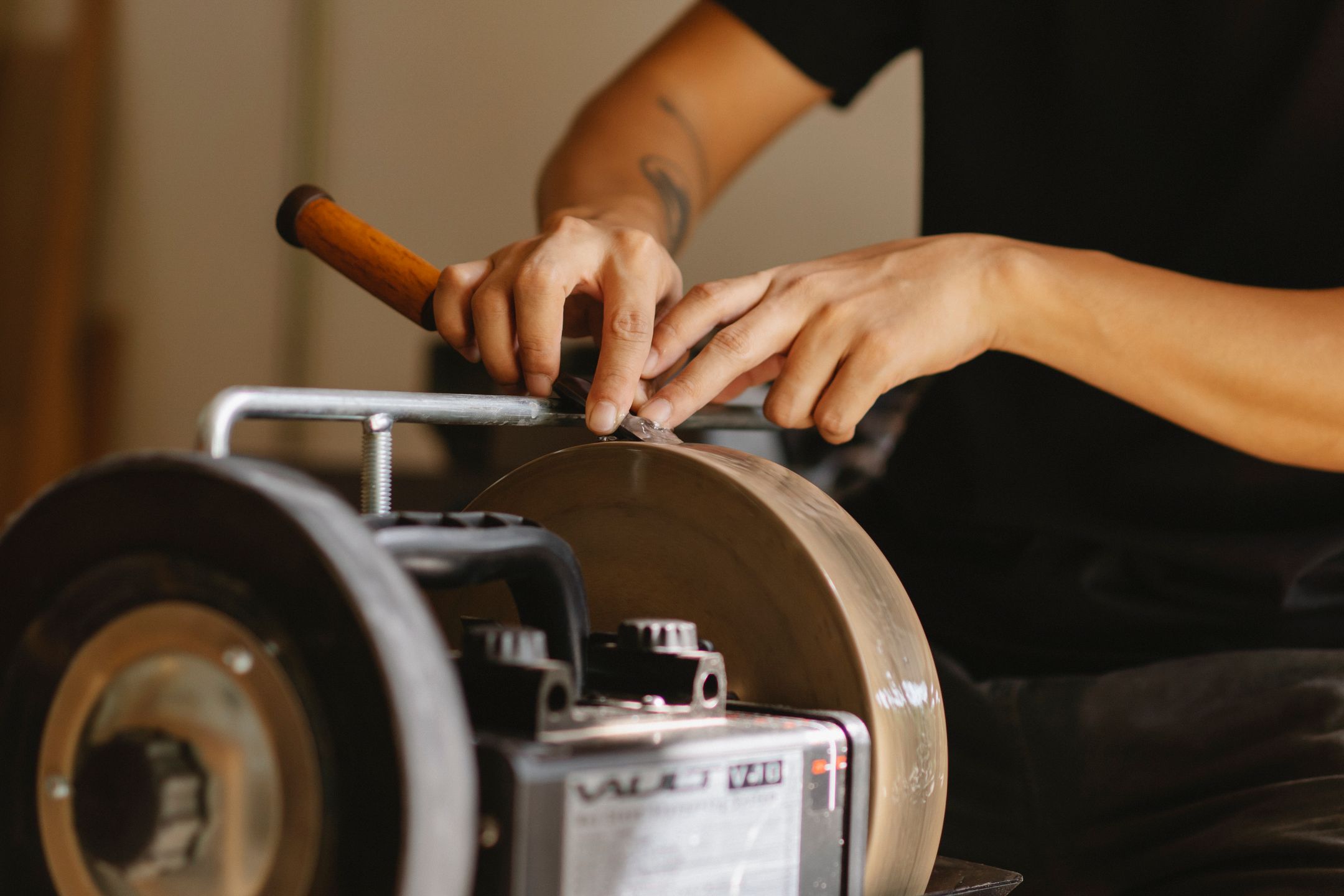
“Centerless” isn’t a marketing name — it describes exactly what’s
missing. A centerless grinder holds the workpiece with no center, no
chuck, no spindle at all, supported entirely between a work rest blade
and two wheels. That’s what makes it fast enough for high-volume work
that cylindrical grinding, held between centers, isn’t built for.
Centerless vs. cylindrical vs. surface grinding
Three grinding processes compared
Centerless grinding
Cylindrical grinding
Surface grinding
Workpiece held by
Work rest blade, between grinding and regulating wheels
Centers (lathe dog) or a chuck
Magnetic or vacuum chuck on a reciprocating table
Rotation
No spindle or center at all
Rotates on its own axis
Not applicable — flat work
Typical parts
Pins, bushings, valve stems, fasteners, small precision components
Shafts, spindles, rollers
Plates, blocks, flat tooling surfaces
How centerless grinding actually works
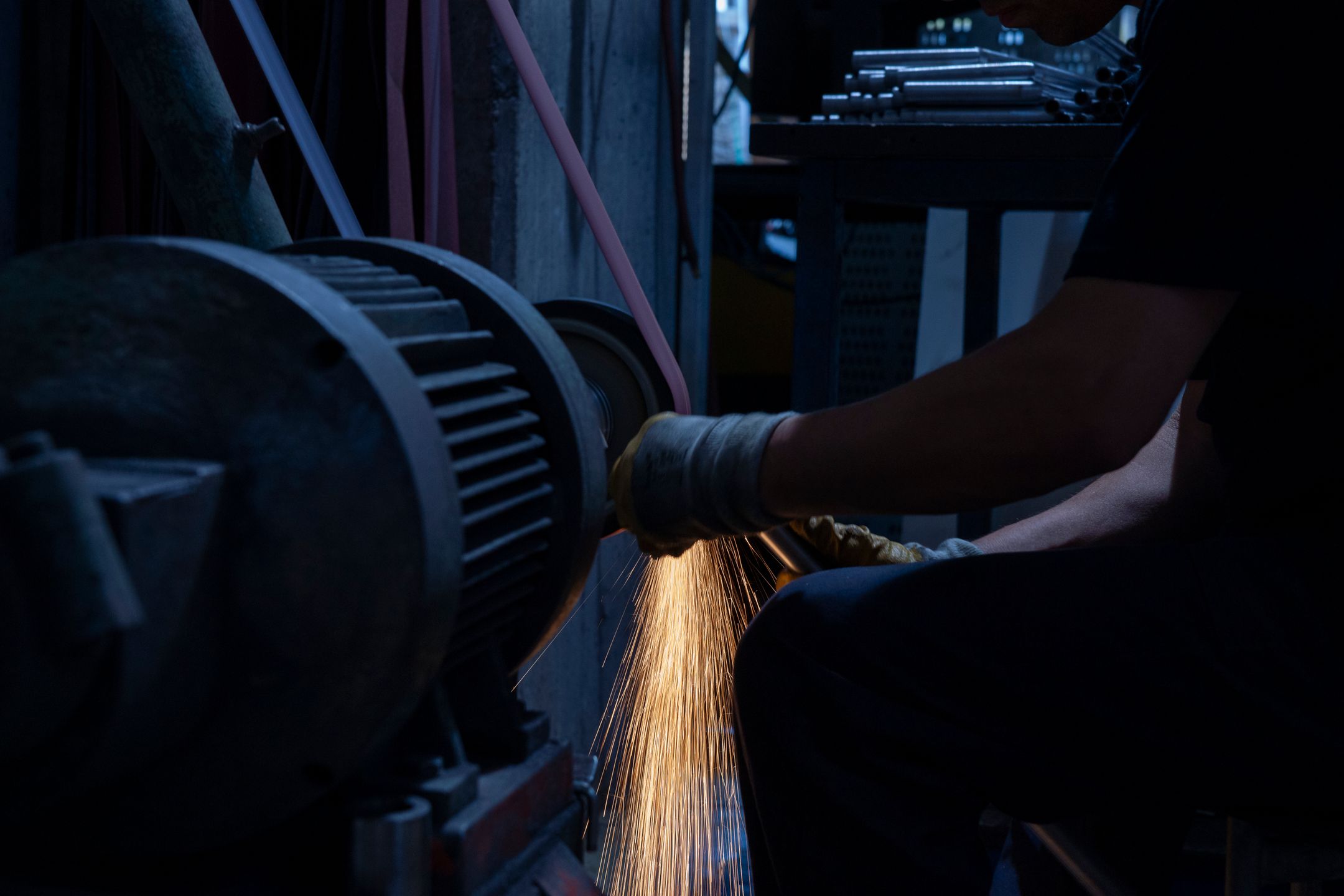
The workpiece sits on a work rest blade, sandwiched between a grinding
wheel that removes material and a regulating wheel that controls both
rotation speed and axial feed. Because there’s no spindle or center
supporting the part, the process handles continuous, high-volume feeding
well — through-feed centerless grinding can process a steady stream of
parts with minimal loading and unloading time, which is exactly why it
shows up so often on small, high-volume cylindrical components: pins,
bushings, valve stems, and precision fasteners.
In-feed (or plunge) centerless grinding is a variant for parts with
features — a shoulder or a head — that a straight through-feed pass
can’t accommodate; internal centerless grinding extends the same basic
principle to bore diameters.
How cylindrical grinding differs
Cylindrical grinding holds the workpiece between centers or in a
chuck and rotates it on its own axis while a separately-driven grinding
wheel removes material — the part supplies its own rotation reference,
rather than relying on a regulating wheel the way centerless grinding
does. This makes it the better fit for longer parts like shafts and
spindles, and for parts needing features ground relative to a specific
center axis that centerless grinding’s blade support can’t reference as
precisely.
Surface grinding, briefly
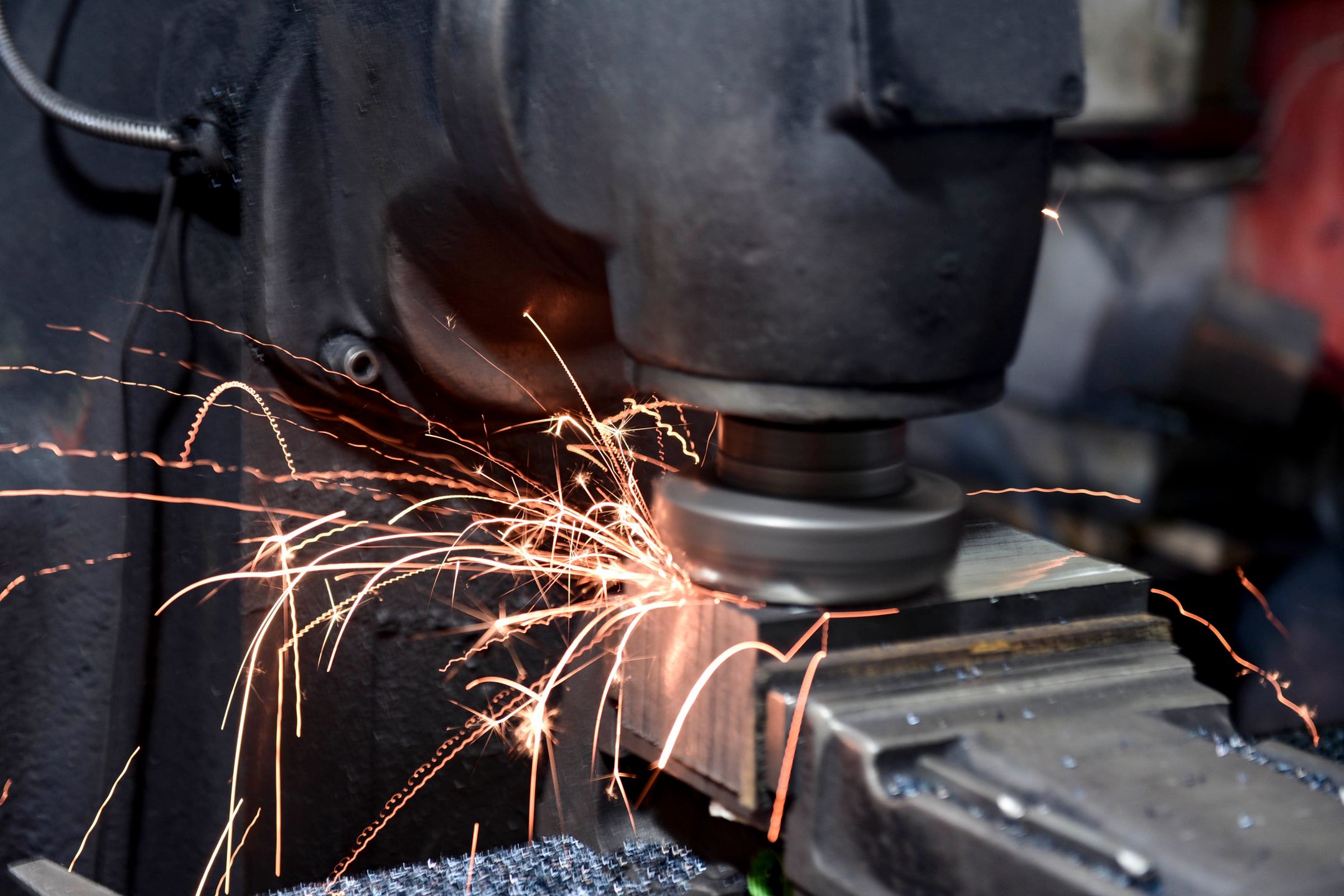
Surface grinding is a different problem entirely — flat surfaces
rather than cylindrical ones. The workpiece sits on a magnetic or vacuum
chuck, and a reciprocating table moves it under the wheel to produce a
flat, precisely dimensioned surface. It’s worth knowing as a contrast
point, not because it competes with the other two for the same parts.
Choosing a grinding wheel
Wheel selection comes down to matching abrasive type (aluminum oxide
for most steels, silicon carbide for harder or more brittle materials),
grit size (finer grit for a smoother finish, coarser for faster material
removal), and hardness grade to both the material being ground and the
finish the part actually requires — a wheel selected for aggressive
material removal on a rough pass is often the wrong choice for a final
finishing pass on the same part.
A wheel that’s too hard for the job glazes over rather than
releasing worn abrasive grains, causing burning and poor finish even
though the wheel “looks fine.” A wheel that’s too soft wears too fast and
loses dimensional consistency across a production run. Getting the
hardness grade right for the specific material is often a bigger lever
on finish quality than the grit size choice most people focus on first.
Grinding and lathe work often show up on the same parts — see our
related guide on
lathe operations and cutting tool angles for the turning side of
precision machining.
If you want to build this into a broader manufacturing fundamentals
program, you can email the training team.
Frequently asked questions
What’s the difference between centerless and cylindrical grinding?
Centerless grinding supports the workpiece on a work rest blade between a grinding wheel and a regulating wheel, with no center or chuck holding it at all. Cylindrical grinding holds the workpiece between centers or in a chuck, and the part rotates on its own axis.
What is centerless grinding used for?
High-volume production of small cylindrical parts — pins, bushings, valve stems, fasteners, and precision components — where continuous through-feed grinding with minimal loading time is a real production advantage.
What is a regulating wheel?
In centerless grinding, the regulating wheel controls the workpiece’s rotation speed and axial feed rate, working opposite the grinding wheel that actually removes material.
How do you choose a grinding wheel?
Match the abrasive type (aluminum oxide for most steels, silicon carbide for harder materials), grit size (finer for smoother finish, coarser for faster removal), and hardness grade to both the material being ground and the finish the part requires.
South Carolina Manufacturing Extension Partnership has delivered manufacturing training to South Carolina manufacturers since 1989. Articles are produced and reviewed by SCMEP's training team.