Combustible Dust Hazards: The Explosion Pentagon and NFPA 652
Sugar, wood, and aluminum dust don't look explosive sitting in a bin — but ground fine enough and suspended in the air, any one of them can ignite with the force of a detonation. The five elements of a dust explosion, and what NFPA 652 requires.
July 22, 2026 ·
Updated July 23, 2026 ·
4 min read ·
SCMEP Training Team ·
117 views
Share
Sugar, wood, aluminum, and flour don’t look like
explosive materials sitting in a bin. Ground fine enough and suspended
in the air at the right concentration, any one of them can ignite with
the force of a detonation — which is exactly what happened at a Georgia
sugar refinery in 2008, killing 14 people and prompting a wave of new
combustible dust standards.
The dust explosion pentagon
A normal fire needs three things: fuel, oxygen, and an ignition
source — the classic fire triangle. A combustible dust explosion needs
two more: the fuel has to be dispersed into a cloud, and that cloud has
to be confined enough for pressure to build. Remove any one of the five
and an explosion can’t happen, which is why dust hazard controls focus
on housekeeping (limiting how much dust can accumulate and later become
airborne) and confinement management, not just eliminating ignition
sources.
NFPA 652 and the Dust Hazard Analysis
Key combustible dust standards
Standard
Scope
NFPA 652
General fundamentals of combustible dust, requires a facility-wide Dust Hazard Analysis (DHA)
NFPA 654
Prevention of fire and dust explosions from manufacturing, processing, and handling of combustible particulate solids
NFPA 484 / 61 / 484
Material-specific standards for combustible metals, agricultural dusts, and other industries
NFPA 652 requires facilities that handle combustible dust to
complete a Dust Hazard Analysis identifying where dust accumulates,
what ignition sources are nearby, and what mitigation measures — from
housekeeping schedules to explosion venting — are already in place or
needed. OSHA doesn’t have a single comprehensive combustible dust
standard of its own; it generally cites facilities under the General
Duty Clause and, in some circumstances, incorporates NFPA requirements
by reference.
Why housekeeping is the first control
A commonly cited rule of thumb is that dust layering just 1/32 of an
inch thick — about the thickness of a paperclip — across as little as
5% of a room’s floor area is enough fuel load to sustain a secondary
explosion if a smaller, primary explosion elsewhere in the facility
shakes accumulated dust into the air. That’s why routine housekeeping,
using vacuum systems rather than compressed air (which just launches
dust back into suspension), is the first and most cost-effective layer
of control in most combustible dust programs.
If your facility handles wood, metal, plastic, or food dust and
needs help scoping a Dust Hazard Analysis or building housekeeping
procedures, you can browse the Safety training
catalog or email the training team.
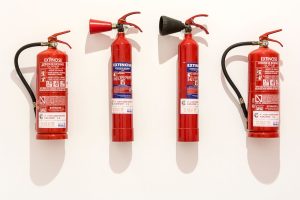
Standard fire extinguishers can react violently with burning combustible metal dust — which is exactly why extinguisher class has to match the specific hazard in that area. Read our guide to fire extinguisher and fire prevention training — what OSHA 1910.157 requires.
Frequently asked questions
What is the combustible dust explosion pentagon?
It adds two elements to the standard fire triangle of fuel, oxygen, and ignition: the combustible dust fuel must be dispersed into a cloud, and that cloud must be confined enough for pressure to build. Removing any one of the five elements prevents an explosion.
What does NFPA 652 require?
NFPA 652 requires facilities that handle combustible dust to complete a facility-wide Dust Hazard Analysis identifying accumulation points, nearby ignition sources, and needed mitigation measures such as housekeeping schedules or explosion venting.
Does OSHA have a combustible dust standard?
OSHA doesn’t have one comprehensive combustible dust standard. It typically cites facilities under the General Duty Clause and, in some circumstances, incorporates NFPA standards like 652 and 654 by reference.
Why does housekeeping matter so much for combustible dust?
Dust layering as thin as 1/32 of an inch across a small percentage of a floor area can provide enough fuel for a secondary explosion. Routine vacuum-based housekeeping, rather than compressed air, is the first and most cost-effective control layer.
South Carolina Manufacturing Extension Partnership has delivered manufacturing training to South Carolina manufacturers since 1989. Articles are produced and reviewed by SCMEP's training team.