Fall Protection Standards for Manufacturers: Which OSHA Rule Actually Applies
A maintenance crew erecting structural steel and a crew doing routine facility work face two different fall protection thresholds — and using the wrong one is a common citation. General industry vs. construction fall protection rules, and when each applies.
July 22, 2026 ·
Updated August 28, 2026 ·
3 min read ·
SCMEP Training Team ·
126 views
Share
4 feet or 6 feet? Manufacturers who split time between general
industry facilities and construction sites often apply the wrong
threshold entirely — general industry triggers fall protection at 4
feet, construction at 6, and the two standards aren’t interchangeable
just because both involve working at height.
Two different standards, two different thresholds
Fall protection height triggers by standard
Standard
Applies to
Height trigger
29 CFR 1910.28
General industry (most manufacturing facilities)
4 feet or more above a lower level
29 CFR 1926.501
Construction work
6 feet or more above a lower level
A manufacturer with an in-house maintenance crew that also does
occasional construction-type work — building an addition, erecting
structural steel — needs to recognize which standard actually applies
to that specific task, since the two thresholds genuinely differ.
What counts as adequate protection
Both standards accept the same basic family of protection methods:
guardrail systems, safety net systems, and personal fall arrest
systems, with 1910.28 also recognizing travel restraint and positioning
systems for certain applications. Under 1910.28, holes, hoist areas,
dockboards, runways, and areas around dangerous equipment all trigger
protection requirements starting at 4 feet — even indoor platforms and
mezzanines most people wouldn’t immediately think of as a “fall
hazard.”
The under-4-feet requirement people miss
Even below the 4-foot trigger, 1910.28 still requires protecting
employees from tripping into holes, typically through covers or
guardrail systems — a requirement that’s easy to overlook since it
doesn’t involve a dramatic height. A floor-level hole covered
inadequately is still a citable gap, regardless of how far someone
could actually fall.
Fixed ladders: a specific, often-missed trigger
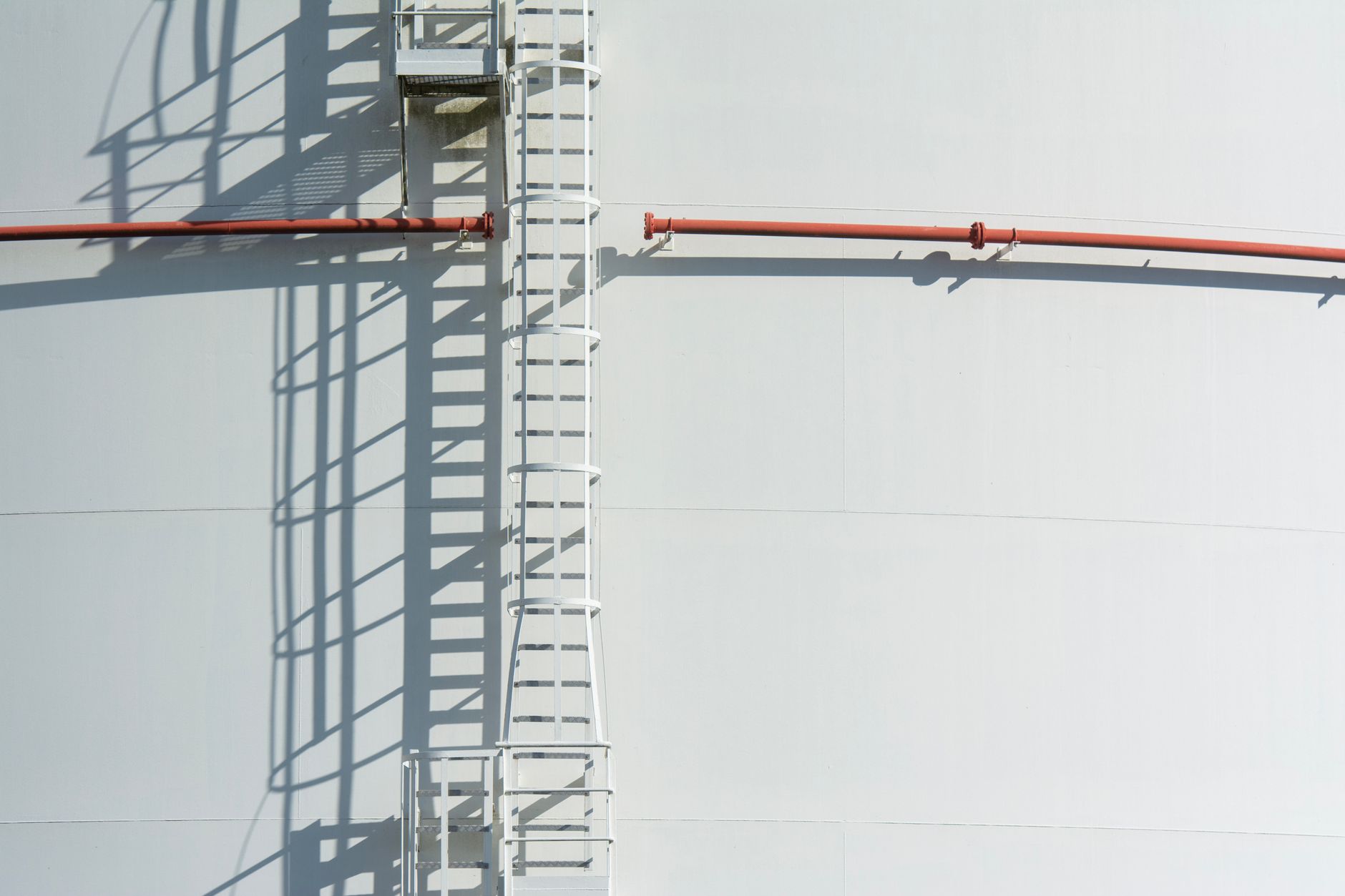
Fixed ladders exceeding 24 feet require a personal fall arrest
system or a ladder safety system — a specific, numeric trigger that
applies to permanently installed ladders on tanks, silos, and elevated
platforms throughout a typical manufacturing facility. It’s a detail
easy to miss during a general facility safety review that focuses on
more obvious hazards like open platform edges.
What height triggers fall protection in a manufacturing facility?
Under 29 CFR 1910.28 (general industry), fall protection is required at 4 feet or more above a lower level. Construction work falls under a separate standard, 29 CFR 1926.501, which triggers at 6 feet.
What protection methods satisfy fall protection requirements?
Guardrail systems, safety net systems, and personal fall arrest systems are accepted under both standards. General industry (1910.28) also recognizes travel restraint and positioning systems for certain applications.
Do fixed ladders require fall protection?
Fixed ladders exceeding 24 feet require a personal fall arrest system or a ladder safety system under 1910.28 — a specific, often-overlooked trigger for permanently installed ladders on tanks, silos, and elevated platforms.
Is protection required below the 4-foot threshold?
Yes, in specific cases. Even below 4 feet, employees must be protected from tripping into holes through covers or guardrail systems, regardless of how far someone could actually fall.
South Carolina Manufacturing Extension Partnership has delivered manufacturing training to South Carolina manufacturers since 1989. Articles are produced and reviewed by SCMEP's training team.