OSHA HazCom & GHS Labeling: Reading Pictograms, SDS Sheets, and Signal Words
Every chemical container is supposed to tell the same story twice — once on the label, once on the Safety Data Sheet — using a system the whole world agreed to use the same way. What OSHA's Hazard Communication Standard actually requires, and how to read a GHS label.
July 22, 2026 ·
Updated August 28, 2026 ·
4 min read ·
SCMEP Training Team ·
97 views
Share
Every chemical container on a shop floor is supposed to
tell the same story twice — once on its label, once on its Safety Data
Sheet — using a system the whole world agreed to use the same way. That
system is the Globally Harmonized System, and OSHA’s Hazard
Communication Standard is what makes following it mandatory in the
United States.
What 1910.1200 actually requires
OSHA’s Hazard Communication Standard, 29 CFR 1910.1200, requires any
workplace where hazardous chemicals are present to maintain a written
hazard communication program, keep a Safety Data Sheet on file for every
hazardous chemical, label containers correctly, and train employees on
the hazards they’re actually exposed to. The 2012 update aligned OSHA’s
rule with the UN’s Globally Harmonized System of Classification and
Labelling of Chemicals (GHS), replacing the old, inconsistent MSDS
formats and label styles that used to vary by manufacturer.
Reading a GHS label
GHS label elements
Element
What it tells you
Pictogram
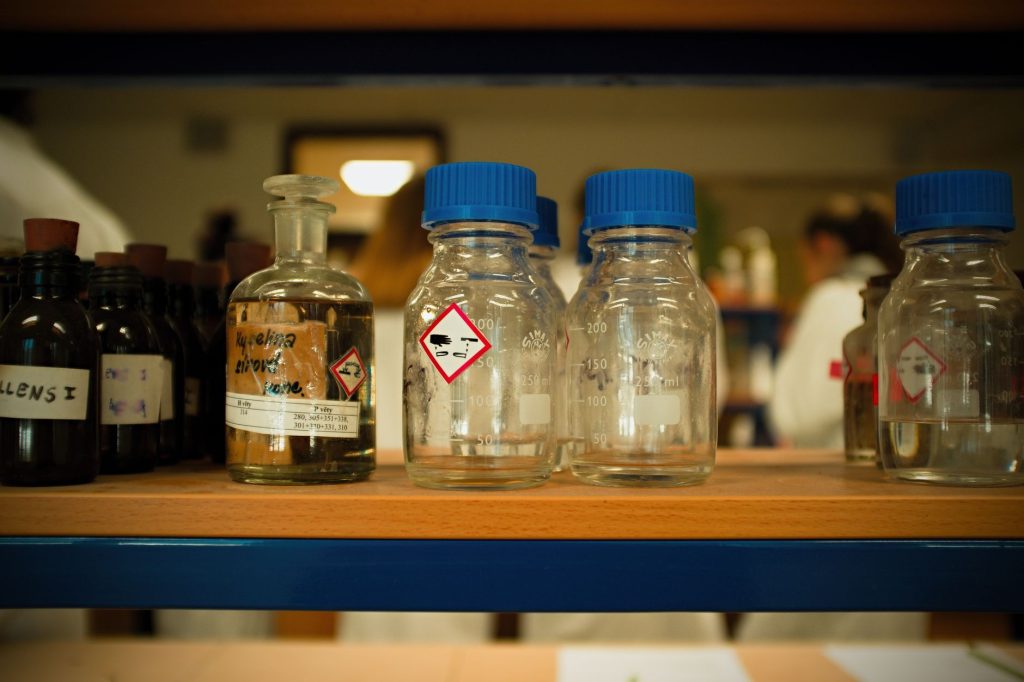
Red diamond symbol showing the hazard class (flame, corrosion, health hazard, and others)
Signal word
“Danger” for more severe hazards, “Warning” for less severe ones
Hazard statement
Standardized phrase describing the nature of the hazard, e.g. “Causes skin irritation”
Precautionary statement
What to do to minimize or prevent exposure
The Safety Data Sheet’s 16 sections
GHS standardized Safety Data Sheets into a fixed 16-section format,
replacing the old MSDS layouts that put critical information in
different places depending on the manufacturer. Sections cover
identification, hazard identification, composition, first-aid measures,
firefighting measures, handling and storage, exposure controls and
personal protective equipment, and more, always in the same order — so
an employee who learns to navigate one SDS can navigate any of them.
Training triggers
Employees need HazCom training when they’re initially assigned to a
job involving hazardous chemicals, and again whenever a new chemical
hazard is introduced into their work area. Training has to cover the
standard itself, the physical and health hazards of the chemicals in
the work area, the labeling system, how to read an SDS, and the specific
protective measures the facility has in place — not just a generic
video that never mentions what’s actually on site.
A GHS-compliant chemical label and a bloodborne pathogens exposure control plan are both hazard communication requirements many facilities handle separately, when they overlap more than expected. Read our guide to bloodborne pathogens exposure control — what OSHA 1910.1030 requires.
Frequently asked questions
What is OSHA’s Hazard Communication Standard?
29 CFR 1910.1200 requires workplaces with hazardous chemicals to maintain a written hazard communication program, keep Safety Data Sheets on file, label containers according to the Globally Harmonized System, and train employees on the chemical hazards they’re exposed to.
What are the required elements of a GHS label?
A GHS-compliant label includes a pictogram showing the hazard class, a signal word (“Danger” or “Warning”), a hazard statement describing the nature of the hazard, and precautionary statements explaining how to minimize exposure.
How many sections does a Safety Data Sheet have?
GHS standardized Safety Data Sheets into a fixed 16-section format covering identification, hazards, composition, first-aid measures, handling and storage, exposure controls, and other required information, always presented in the same order.
When is HazCom training required?
Employees need training when initially assigned to work involving hazardous chemicals and again whenever a new chemical hazard is introduced into their work area, covering the specific chemicals and protective measures at that facility.
South Carolina Manufacturing Extension Partnership has delivered manufacturing training to South Carolina manufacturers since 1989. Articles are produced and reviewed by SCMEP's training team.