Rigging Equipment and Sling Angles: Why the Math Matters
A sling rigged at 30 degrees from horizontal carries roughly twice the tension of the same sling rigged straight up and down — the single fact behind more rigging overload incidents than any equipment failure. OSHA's rigging equipment rules and inspection requirements.
July 22, 2026 ·
Updated July 23, 2026 ·
4 min read ·
SCMEP Training Team ·
122 views
Share
A sling rigged at 30 degrees from horizontal carries roughly twice the
tension of the same sling rigged straight up and down. That single fact
— sling angle changes load, not just geometry — is behind more rigging
overload incidents than any single piece of equipment failing.
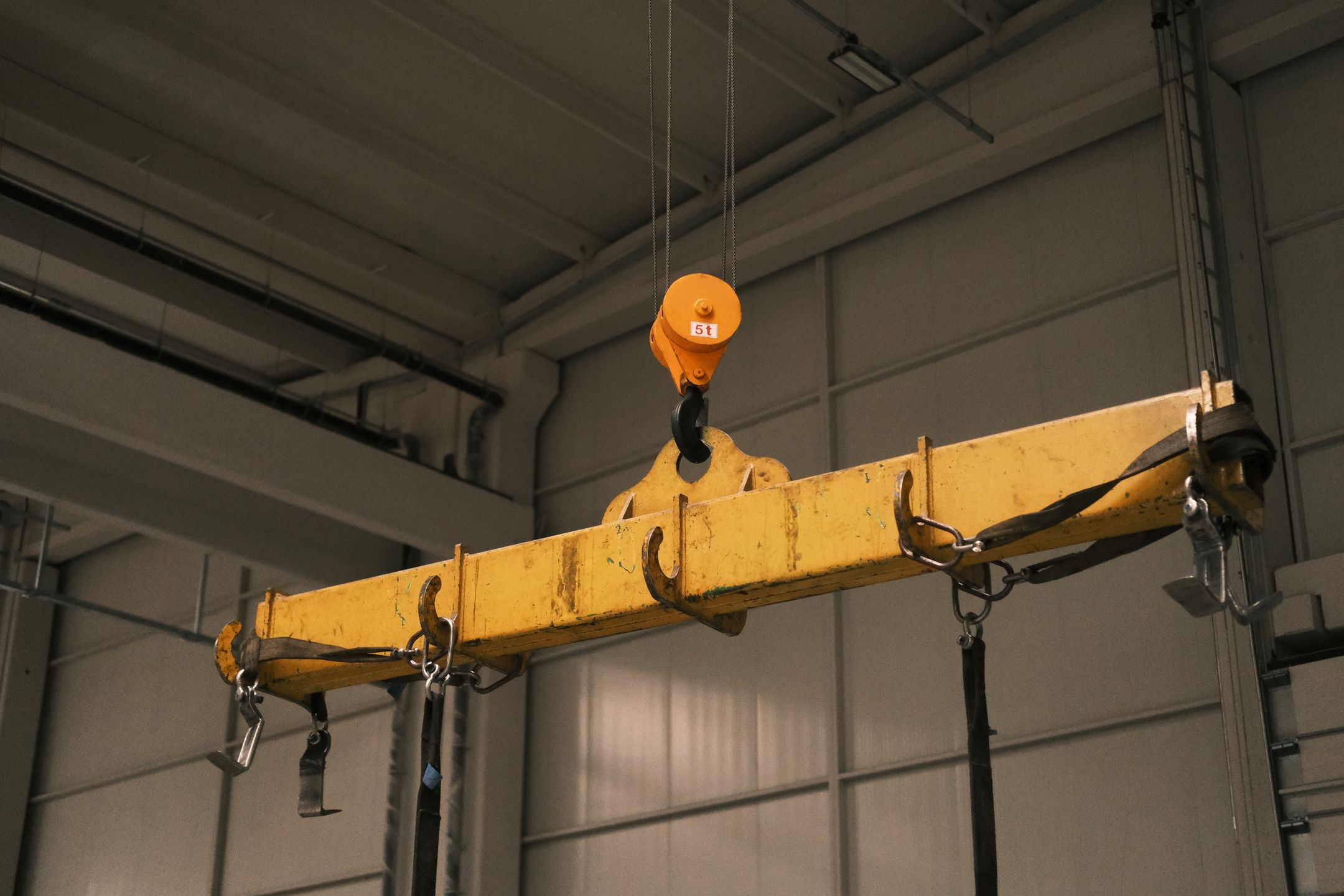
Common rigging devices
OSHA’s rigging equipment standard (29 CFR 1926.251) covers alloy
steel chain slings, wire rope slings, metal mesh slings, natural and
synthetic fiber rope slings, and synthetic web slings, along with the
shackles and hooks used to connect them to a load. Each type trades off
weight capacity, flexibility, and resistance to cuts or heat differently
— a synthetic web sling is lighter and won’t mark a finished surface, but
a wire rope or chain sling tolerates heat and abrasion a web sling
can’t.
Why sling angle matters more than most people assume
Sling angle from horizontal vs. load factor
Angle from horizontal
Load factor
90° (vertical)
1.00
60°
1.15
45°
1.41
30°
2.00
15°
3.86
Each leg’s tension equals the load divided by the number of legs,
multiplied by that load factor — so as the angle decreases from
vertical, tension in each leg rises sharply, not gradually. A sling
rated well within its working load limit at a steep angle can be
dangerously overloaded at a shallow one, using the exact same equipment
and the exact same load. This is the single most common rigging
miscalculation, and it’s pure trigonometry, not a judgment call.
This is also why rigging math and shop trigonometry overlap more than
people expect — the same sine relationship that sets a sine bar’s gage
block height also determines how much extra tension a shallow sling
angle adds to a lift. See our related guide on shop trigonometry for
machinists for the underlying math.
Inspection and working load limits
OSHA requires rigging equipment to be inspected before each shift and
as needed during use by a designated competent person, with defective
gear pulled from service immediately. Alloy steel chain slings need a
more thorough periodic inspection at least every 12 months. All rigging
equipment must carry a permanent, legible marking showing its rated or
safe working load — a limit that must never be exceeded regardless of
how confident anyone is that “it’ll hold.” Custom-fabricated lifting
accessories must be proof-tested to 125% of rated load before they’re
ever used on a real lift.
What “designated competent person” actually means
OSHA doesn’t require a specific certification for the person doing
pre-shift rigging inspections — it requires someone genuinely capable of
identifying hazards and with the authority to take defective equipment
out of service immediately. In practice, that’s usually a trained,
experienced rigger or supervisor, formally designated by the employer,
not just whoever happens to be standing nearby when a lift needs to
happen. Formally naming that person, rather than leaving it ambiguous,
is part of what keeps daily inspection from becoming a box-checking
exercise nobody actually owns.
Rigging math determines whether a load is safe to lift; a separate requirement governs whether the person running the crane is qualified to lift it. See our related guide on overhead crane operator certification for NCCCO’s written and practical exam requirements.
Frequently asked questions
What are the rigging devices used to move loads?
Common rigging devices include chain slings, wire rope slings, metal mesh slings, natural and synthetic fiber rope slings, and synthetic web slings, connected to a load using shackles and hooks. Each type has different capacity, flexibility, and heat/abrasion resistance tradeoffs.
How does sling angle affect load capacity?
As sling angle decreases from vertical, tension in each leg increases sharply — at 30 degrees from horizontal, tension roughly doubles compared to a vertical lift of the same load. This is a common source of accidental overload since the physical load hasn’t changed, only the geometry.
How often should rigging equipment be inspected?
OSHA requires inspection before each shift and as needed during use by a designated competent person, with defective equipment removed from service immediately. Alloy steel chain slings additionally require a thorough periodic inspection at least every 12 months.
What is a working load limit?
The maximum load a piece of rigging equipment is rated to safely lift, permanently and legibly marked on the equipment itself. This limit accounts for the actual lift geometry (including sling angle), and it must never be exceeded.
South Carolina Manufacturing Extension Partnership has delivered manufacturing training to South Carolina manufacturers since 1989. Articles are produced and reviewed by SCMEP's training team.