AUTOMATION & ROBOTICS
Sensors and Encoders in Industrial Automation: The Basics
An introduction to the sensors and encoders manufacturers rely on for automation, from proximity sensors to photoelectric beams.
An introduction to the sensors and encoders manufacturers rely on for automation, from proximity sensors to photoelectric beams.
A PLC is only as good as the information it
receives, and every piece of that information starts at a sensor. A
program with flawless logic still fails if the proximity sensor
feeding it is the wrong type for the material it’s supposed to detect.

Inductive proximity sensors detect metal objects specifically,
using an electromagnetic field that only responds to conductive
material. Capacitive proximity sensors detect a broader range of
materials — plastic, liquid, wood — by sensing changes in capacitance,
making them the better choice when the target isn’t metal.
| Type | How it works |
|---|---|
| Through-beam | Separate emitter and receiver on opposite sides of the target; most reliable, needs two mounting points |
| Retroreflective | Emitter and receiver in one unit, bouncing the beam off a reflector; easier install, single mounting point |
| Diffuse | Emitter and receiver in one unit, detecting light reflected directly off the target itself |
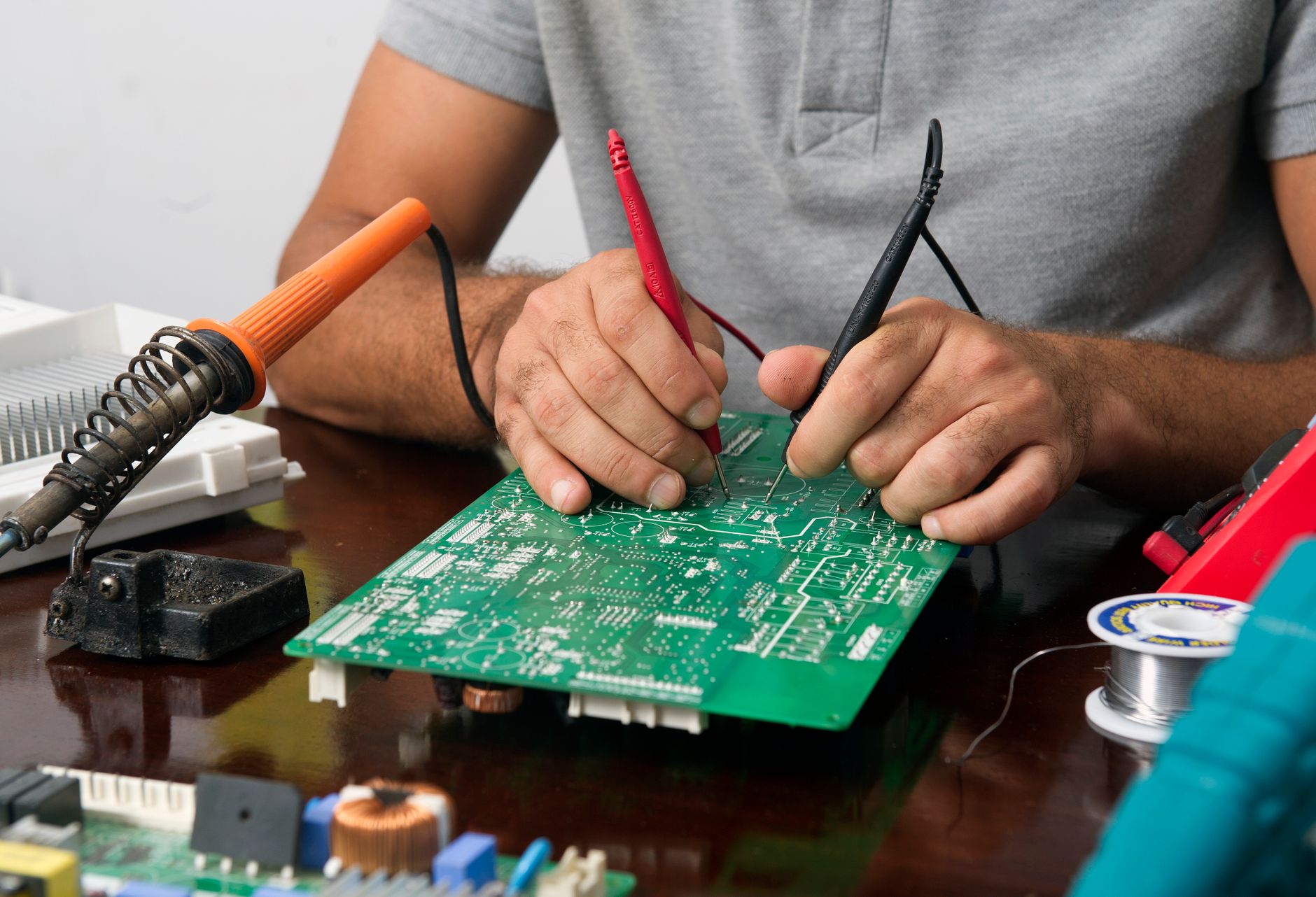
Where a proximity or photoelectric sensor typically answers a
yes-or-no question — is something there or not — a rotary encoder
measures actual position or speed by counting pulses as a shaft
rotates. Incremental encoders count pulses relative to a starting
point, while absolute encoders report a unique position value at
every point in a rotation, even after a power loss.

The most common sensor selection mistake is choosing based on what
worked on a similar machine rather than the specific target material,
ambient conditions, and required sensing distance for the current
application. An inductive sensor specified for a plastic target simply
won’t work, regardless of how correctly everything downstream in the
PLC is programmed.
Sensor and encoder fundamentals fit inside the hands-on automation
work covered in SCMEP’s Automation and
Robotics training catalog. As a NIST
Manufacturing Extension Partnership affiliate serving South Carolina
manufacturers since 1989, our focus is matching sensor selection to
your actual target materials and mounting constraints.
If your team is troubleshooting a sensor selection issue or
specifying sensors for a new installation, you can
browse the Automation and Robotics
training catalog or email the training team.
Encoder feedback is what lets a VFD control motor speed precisely instead of just estimating it. See our guide to Variable Frequency Drives — how VFDs control motor speed and cut energy use.
Inductive sensors detect metal objects specifically using an electromagnetic field. Capacitive sensors detect a broader range of materials, including plastic, liquid, and wood, by sensing changes in capacitance.
Through-beam sensors use separate emitter and receiver units for the most reliable detection, retroreflective sensors bounce a beam off a reflector, and diffuse sensors detect light reflected directly off the target.
Proximity and photoelectric sensors typically answer a yes-or-no presence question. A rotary encoder measures actual position or speed by counting pulses as a shaft rotates.
Choosing a sensor based on what worked on a similar machine, rather than the specific target material, ambient conditions, and required sensing distance for the current application.