End-of-Arm Tooling: Choosing the Right Robotic Gripper
A robot arm without end-of-arm tooling is just a very precise pointer. The common gripper types, how quick-change tool changers work, and why EOAT pinch points are assessed separately from the robot's own safety rating.
July 22, 2026 ·
Updated July 23, 2026 ·
3 min read ·
SCMEP Training Team ·
131 views
Share
A robot arm without end-of-arm tooling is just a very
precise pointer. It can move to any position with repeatable accuracy,
but it can’t pick up a part, place a weld, or apply adhesive until
something is attached to its wrist that actually does the work.
What end-of-arm tooling does
End-of-arm tooling (EOAT) is the general term for whatever is
mounted to a robot’s wrist flange to interact with a part or process —
a gripper, a welding torch, a dispensing nozzle, a sanding tool. The
robot arm handles positioning and motion; the EOAT handles the actual
task. Choosing the wrong EOAT for the application is one of the most
common reasons a robotic cell underperforms even when the robot itself
is programmed correctly.
Common gripper types
Common gripper types and their use cases
Gripper type
Best suited for
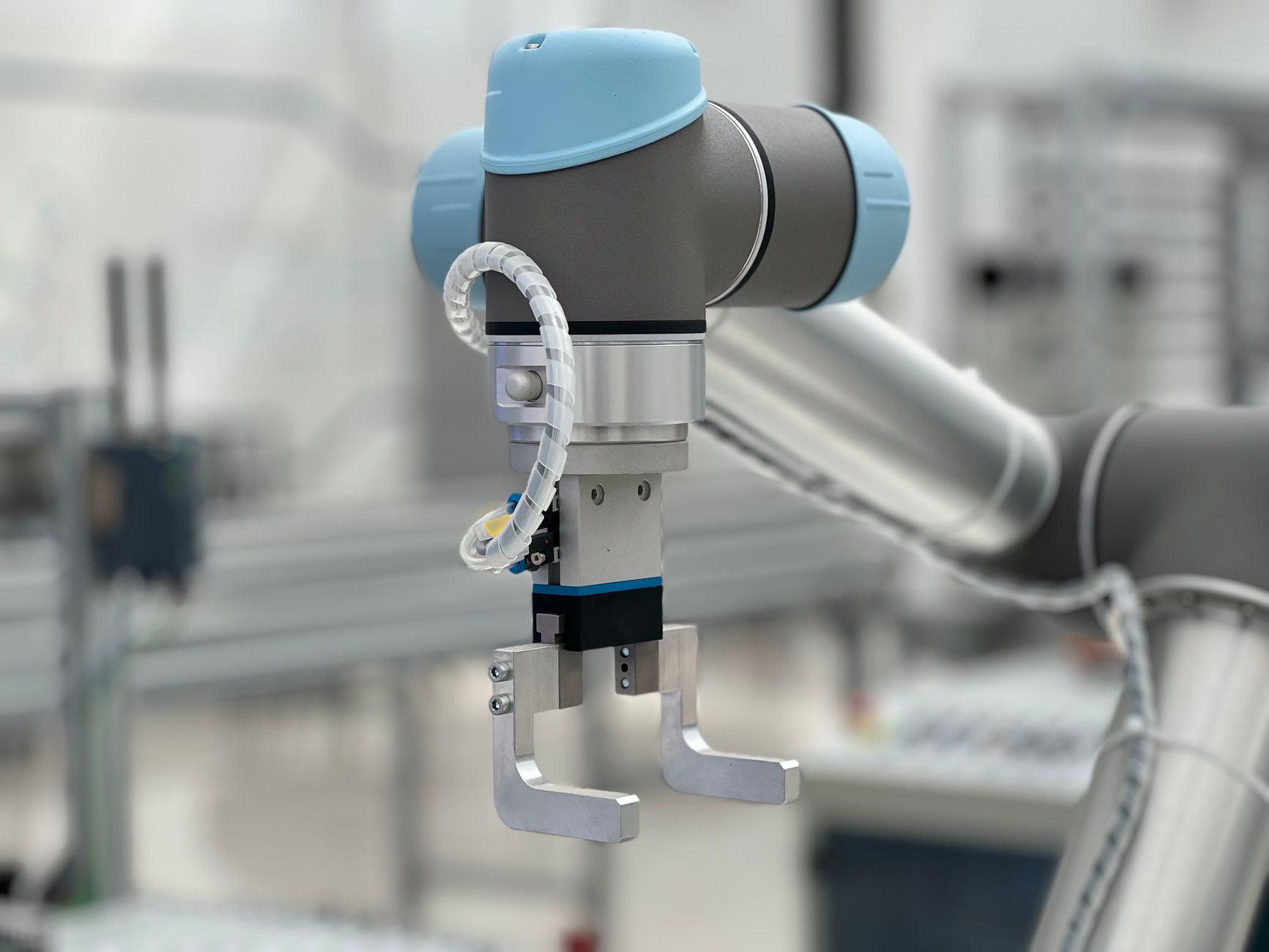
Mechanical / parallel jaw
Rigid parts with consistent geometry that can be grasped from two or more sides
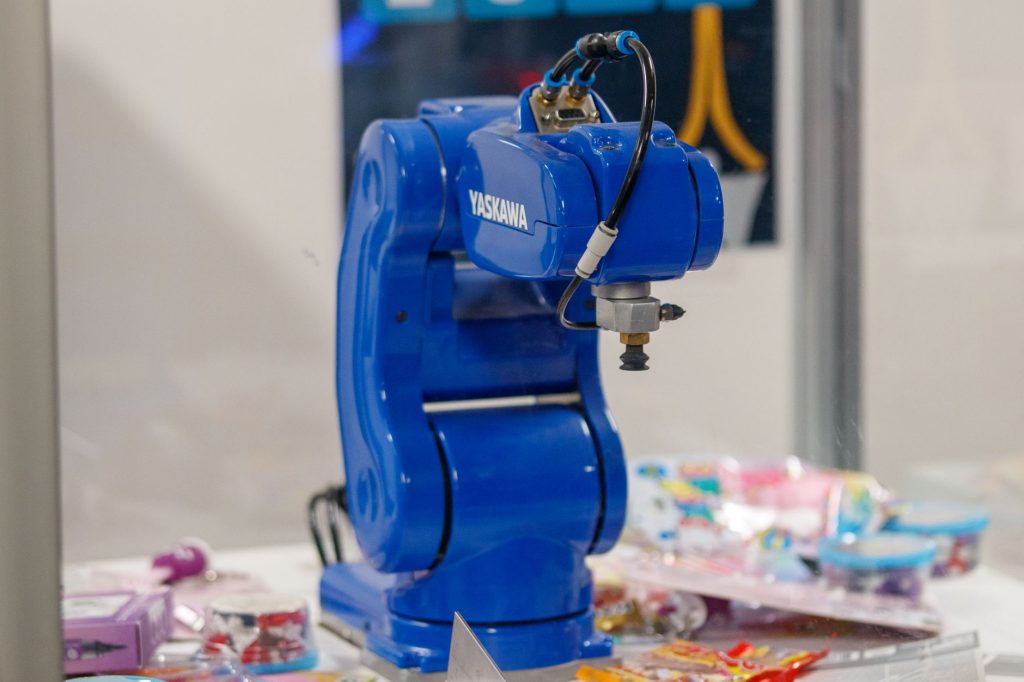
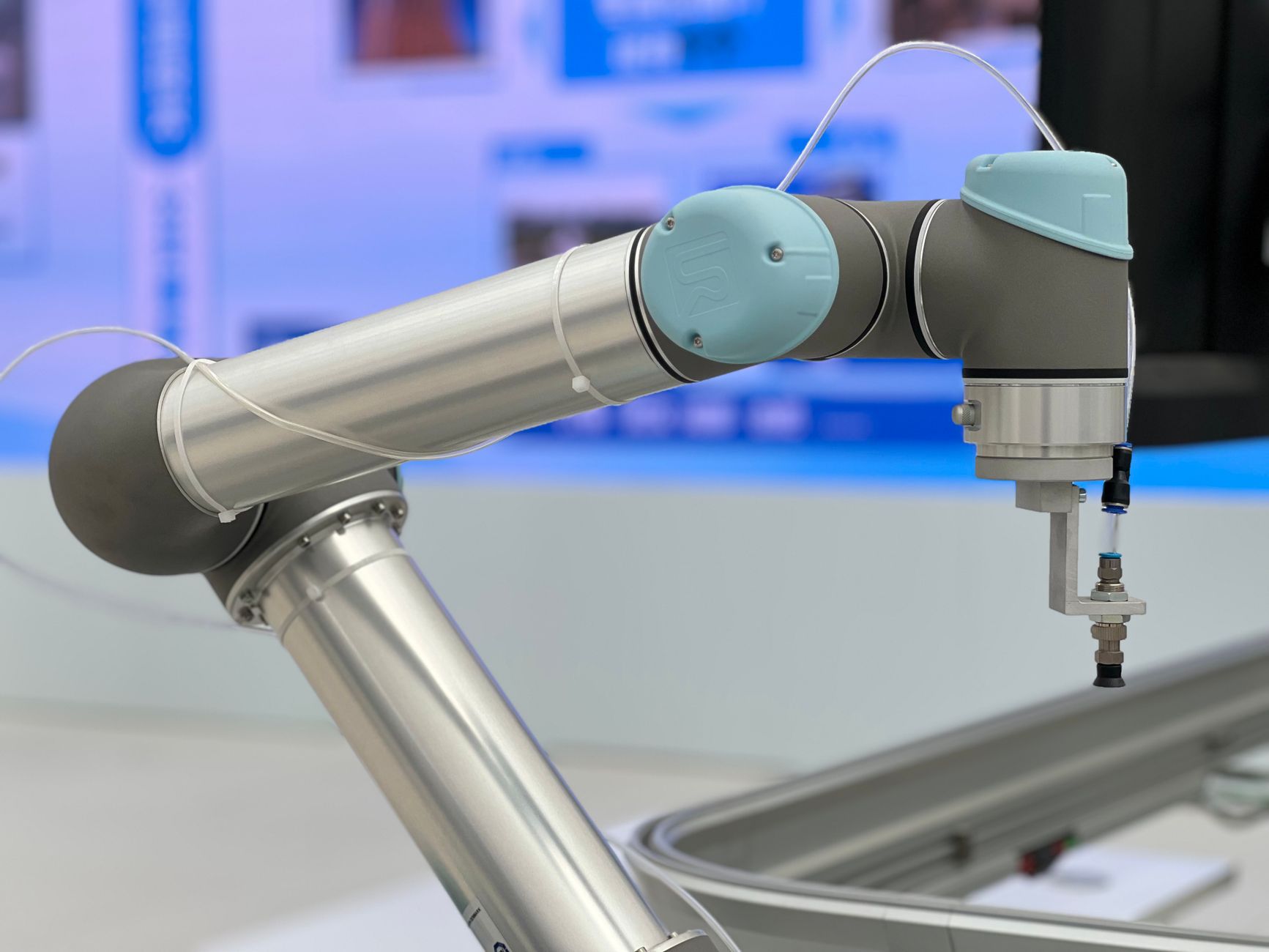
Vacuum / suction cup
Flat, non-porous surfaces such as sheet metal, glass, or packaging
Magnetic
Ferrous metal parts, especially flat or irregularly shaped ones a mechanical gripper can’t clamp easily
Soft / compliant
Fragile, irregular, or varying-size parts, increasingly common with collaborative robots
Quick-change tooling
A robotic tool changer lets a single robot swap between different
end-of-arm tools automatically, mid-cycle, without a technician manually
unbolting and rebolting hardware. This matters most in cells handling
multiple part types or multiple operations — pick-and-place followed by
a dispensing step, for example — where dedicating a separate robot to
each tool wouldn’t be economical.
Where EOAT intersects with safety
See our related guide on
cobot safety standards for how ISO/TS 15066’s power and force
limiting requirements apply to the robot arm itself. Even on a
collaborative robot certified for reduced force, the end-of-arm tooling
is evaluated separately — a sharp gripper jaw or pinch point at the
wrist can still pose a hazard the arm’s own force limiting doesn’t
address.
The servo motors driving a robot’s joints are a different question from the end-of-arm tooling doing the actual gripping. Read our guide to servo motors vs. stepper motors — which one fits your application.
Frequently asked questions
What is end-of-arm tooling?
End-of-arm tooling (EOAT) is whatever is mounted to a robot’s wrist flange to interact with a part or process, such as a gripper, welding torch, or dispensing nozzle. The robot handles positioning while the EOAT performs the actual task.
What are the main types of robotic grippers?
Common gripper types include mechanical or parallel jaw grippers for rigid parts, vacuum grippers for flat surfaces, magnetic grippers for ferrous metal, and soft or compliant grippers for fragile or irregular parts.
What does a robotic tool changer do?
A tool changer lets a single robot swap between different end-of-arm tools automatically mid-cycle, without manual rebolting, which is useful in cells handling multiple part types or operations.
Does cobot safety certification cover the end-of-arm tooling too?
Not automatically. Even on a collaborative robot certified for reduced force under ISO/TS 15066, the end-of-arm tooling is evaluated separately, since a sharp gripper jaw or pinch point can still pose a hazard the arm’s force limiting doesn’t address.
South Carolina Manufacturing Extension Partnership has delivered manufacturing training to South Carolina manufacturers since 1989. Articles are produced and reviewed by SCMEP's training team.