Jigs vs. Fixtures: The 3-2-1 Principle and Workholding Basics
Every jig is a fixture, but not every fixture is a jig — the distinction is whether the tooling guides the cutting tool itself. The 3-2-1 locating principle, locating vs. clamping, and how to choose between fixture types.
July 22, 2026 ·
5 min read ·
SCMEP Training Team ·
101 views
Share
A jig guides the tool. A fixture holds the part and lets the machine’s
own accuracy do the positioning. That single distinction gets confused
constantly, and it’s worth getting straight before anything else about
fixture design makes sense.
Jig vs. fixture
What a jig does vs. what a fixture does
Jig
Fixture
What it does
Guides the cutting tool directly (e.g., a drill bushing)
Locates and holds the workpiece; doesn’t guide the tool
A rigid part has six degrees of freedom to control before it’s fully
located — it can translate or rotate along three perpendicular axes. The
3-2-1 principle controls all six with exactly six contact points, spread
across three planes: three points on the primary plane (controlling one
translation and two rotations), two points on a secondary plane
perpendicular to the first (controlling one more translation and one more
rotation), and one point on a tertiary plane (controlling the last
translation). Six points, six degrees of freedom, and the seventh
“direction” — however the part gets loaded and unloaded — stays
deliberately open.
Locators are built to be hard, precise, and positioned to take minimal
cutting load — their job is repeatable position, not holding force.
That’s a separate job entirely.
Locating vs. clamping — not the same job
Locators establish position; clamps supply the force to hold the part
against that position through cutting or handling loads. Confusing the
two is a common design mistake — a clamp that’s doing double duty as a
locator (or applying force in a direction that shifts the part off its
locators) introduces exactly the position error the fixture was built to
prevent. A well-designed fixture directs clamping force straight into the
locators, not into unsupported material that can flex or shift.
A quick way to spot a bad fixture design
Watch what happens the first time a part comes out of a new fixture
and gets measured. If dimensional results drift depending on who loaded
the part, or vary between the first piece of a shift and the fiftieth,
that’s rarely a machine problem — it’s usually a fixture that isn’t
actually locating consistently, or a clamp that’s flexing thin material
instead of just holding it against solid locators. A fixture that’s doing
its job produces the same part-to-part variation as the machine itself,
not variation layered on top of it from inconsistent loading.
Repeatability is the real test of a fixture design, more than how
solid or expensive it looks. A simple three-point locating scheme that’s
actually rigid and consistently contacted will outperform an elaborate
fixture where an operator has to “feel” the part into position by hand
every cycle.
Common fixture types
Fixture types and where each fits
Type
Best fit
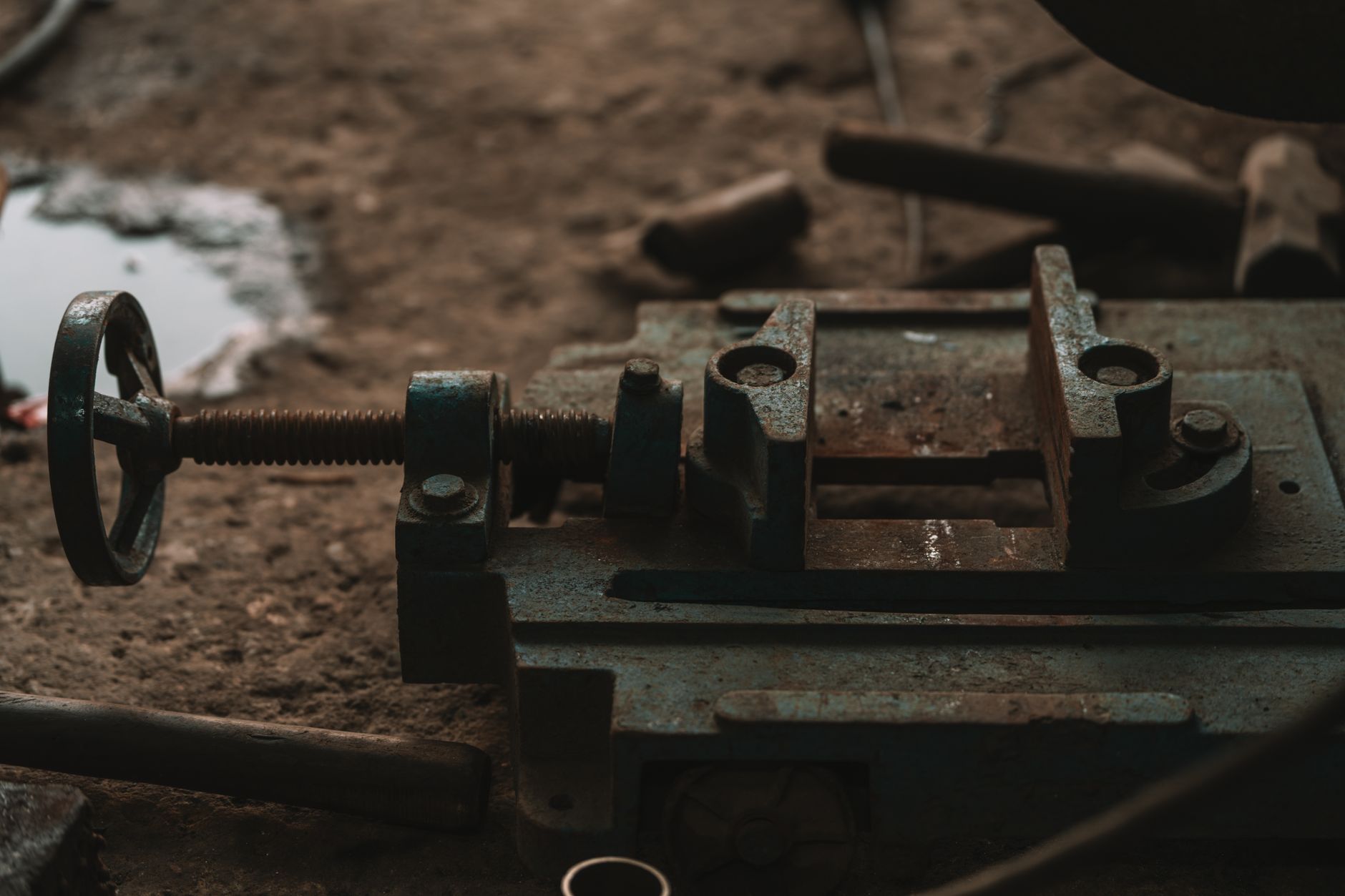
Vise / standard workholding
Simple parts, low volume, quick setup changes
Modular (T-slot, ball-lock, dowel systems)
Mid-volume work needing reusable, reconfigurable tooling
Dedicated / hard fixture
High-volume production of one specific part
Vacuum fixture
Thin, flexible, or composite parts that can’t tolerate clamp pressure
Pallet fixture
Multi-side CNC machining without re-fixturing between operations
Checking / inspection fixture
Verifying GD&T conformance on production parts, common in automotive supply chains
Material and cost tradeoffs
Fixture bodies are typically tool steel, aluminum, or increasingly
3D-printed polymer for lower-volume or prototype work. Steel holds up to
years of production use and repeated wear at contact points, but costs
more and takes longer to build. Aluminum machines faster and costs less,
trading off some long-term wear resistance — a reasonable choice when the
fixture only needs to survive a shorter production run. 3D-printed
fixture bodies have become a genuinely practical option for low-volume or
short-notice tooling, especially for locating and clamping geometry that
doesn’t need to survive years of abrasive contact.
The real cost of a fixture isn’t just the build cost — it’s build cost
plus the cost of every changeover and every reject caused by a design
that doesn’t locate consistently. A more expensive, well-designed fixture
that holds tolerance shift after shift is very often cheaper over the
life of the part than a cheap one that needs constant adjustment or
produces scrap.
What’s the difference between a jig and a fixture?
A jig guides the cutting tool directly, like a drill bushing. A fixture locates and holds the workpiece but doesn’t guide the tool — positional accuracy instead comes from the machine itself, like a mill or CNC.
What is the 3-2-1 locating principle?
A method of controlling all six degrees of freedom of a rigid part using six contact points across three perpendicular planes: three points on the primary plane, two on a secondary plane, and one on a tertiary plane — leaving only the load/unload direction open.
What’s the difference between locating and clamping in a fixture?
Locators establish the part’s repeatable position and should carry minimal load. Clamps supply the holding force to keep the part against those locators during machining. Clamping force should be directed into the locators, not into unsupported material.
What are the main types of fixtures?
Common types include vise/standard workholding, modular fixtures (reusable T-slot or ball-lock systems), dedicated hard fixtures for high-volume single parts, vacuum fixtures for thin or flexible parts, pallet fixtures for multi-side CNC work, and checking fixtures used to verify part conformance.
South Carolina Manufacturing Extension Partnership has delivered manufacturing training to South Carolina manufacturers since 1989. Articles are produced and reviewed by SCMEP's training team.