SCADA Systems in Manufacturing: Supervisory Control Explained
A PLC controls one machine. SCADA is what lets someone see and coordinate all of them at once. How SCADA relates to PLC programming, and why industrial control system security is its own discipline.
July 22, 2026 ·
Updated July 23, 2026 ·
4 min read ·
SCMEP Training Team ·
146 views
Share
A PLC controls one machine. SCADA is what lets someone see and
coordinate all of them at once — which is exactly why confusing the
two causes real integration headaches when a plant tries to scale up
its monitoring beyond a single line.
What SCADA actually is
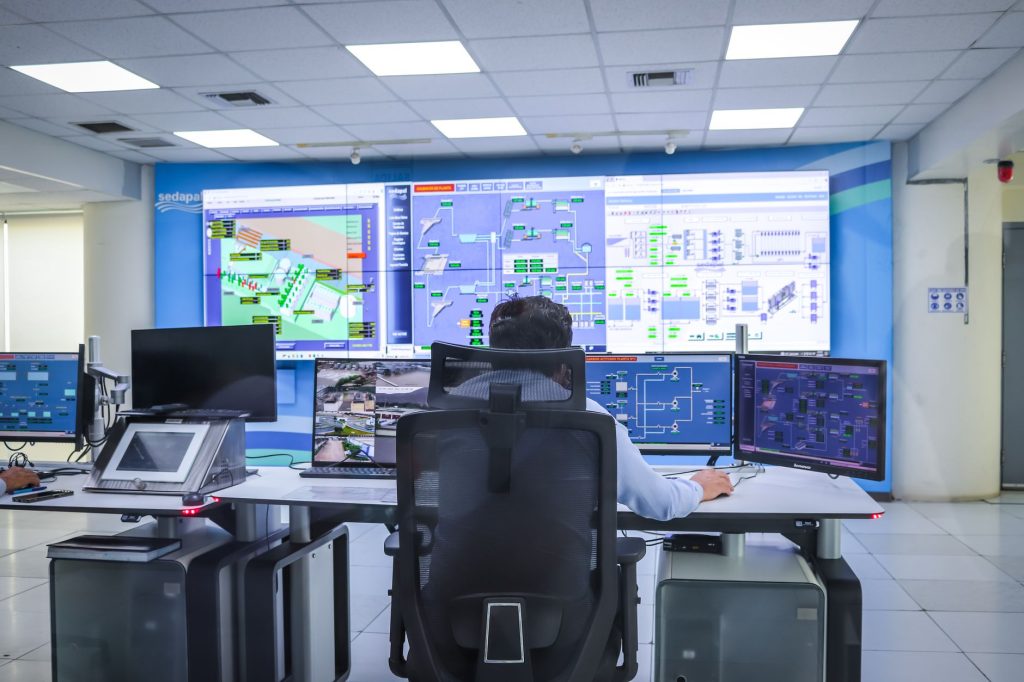
Supervisory Control and Data Acquisition (SCADA) is a system
architecture for monitoring and controlling industrial processes across
a plant or facility, not a single device. At the field level, PLCs and
remote terminal units (RTUs) handle the actual real-time control of
individual machines and sensors. SCADA sits above that layer, gathering
data from those field devices, presenting it through a Human-Machine
Interface (HMI) for operators, and giving supervisory-level visibility
and control across the whole system.
SCADA vs. PLC programming: different layers
SCADA and PLCs operate at different levels
PLC
SCADA
Scope
Controls a single machine or process
Monitors and supervises multiple systems across a plant
Function
Executes real-time control logic (ladder logic, etc.)
Aggregates data, visualizes it, and allows supervisory control
Typical user
Controls engineer, maintenance technician
Plant operator, supervisor
Our related guide on Siemens
PLC ladder logic covers the device-level programming layer that
feeds data up into a SCADA system — the two are complementary layers of
the same automation stack, not competing technologies.
Why SCADA security is its own discipline
Because SCADA systems connect field-level industrial control
equipment to plant networks — and increasingly to broader IT
infrastructure — they carry security risks distinct from a typical
office IT system, where a compromised HMI or exposed remote access
point can translate directly into a physical safety or production
incident, not just a data breach. NIST Special Publication 800-82,
“Guide to Industrial Control Systems (ICS) Security,” is the federal
reference specifically written to address this gap between traditional
IT security and the realities of industrial control environments.
Where SCADA fits with cybersecurity compliance
Manufacturers with defense contracts should note that SCADA and
broader industrial control system security connects directly to the
compliance work covered in our related guide on CMMC 2.0 compliance —
an unsecured SCADA or HMI access point can be exactly the kind of gap
that puts Controlled Unclassified Information at risk, even when the
SCADA system itself isn’t directly handling that data.
The operator screens sitting on top of a SCADA system have their own design discipline. See our related guide on HMI design best practices for what the ISA-101 style guide standardizes about screen design.
SCADA handles real-time supervisory control of a specific process; a related technology aggregates sensor data more broadly across a whole fleet of assets. See our related guide on Industrial IoT (IIoT) for how it complements, rather than replaces, SCADA.
A SCADA system often supervises the same batch process an ISA-88 recipe structure is built to control — the two typically work together, not as alternatives. Read our guide to ISA-88 batch control fundamentals.
Frequently asked questions
What does SCADA stand for?
Supervisory Control and Data Acquisition — a system architecture for monitoring and controlling industrial processes across a plant, sitting above individual PLCs and RTUs at the field level.
What’s the difference between SCADA and a PLC?
A PLC controls a single machine or process with real-time logic. SCADA operates at a supervisory level, aggregating data from multiple PLCs and RTUs across a plant and presenting it through an HMI for operators.
Why is SCADA security treated differently from typical IT security?
A compromised SCADA system can translate directly into a physical safety or production incident, not just a data breach. NIST SP 800-82 is the federal guide specifically written to address industrial control system security.
Does SCADA security connect to CMMC compliance?
Yes — an unsecured SCADA or HMI access point can be exactly the kind of network gap that puts Controlled Unclassified Information at risk for defense manufacturers, even when the SCADA system doesn’t directly handle that data.
South Carolina Manufacturing Extension Partnership has delivered manufacturing training to South Carolina manufacturers since 1989. Articles are produced and reviewed by SCMEP's training team.