Skip to content

Blog

  • Reliability Centered Maintenance: Is RCM Worth It for Your Plant?

    Reliability Centered Maintenance: Is RCM Worth It for Your Plant?

    Reliability centered maintenance has a reputation problem. Half the content
    written about it is a consultant’s pitch; the other half is a CMMS vendor’s
    blog post. Almost none of it will tell you the plain truth: RCM is genuinely
    powerful, and it is also more analysis than most plants need for most of
    their equipment.

    This guide covers what RCM actually is, the structured questions it’s
    built on, how it compares to reactive, preventive and predictive
    maintenance, and — honestly — when it’s worth the effort and when it isn’t.

    What is reliability centered maintenance?

    RCM is a structured process for deciding the right maintenance strategy
    for each individual asset, based on how it actually fails and what happens
    when it does — rather than applying one blanket schedule to everything in
    the plant.

    The method was formalized in 1978, when Nowlan and Heap wrote it up for
    United Airlines to decide aircraft maintenance schedules — the standard
    it’s built around, SAE JA1011, still traces back to that original aviation
    work. It has since spread into manufacturing, defense, power generation,
    and process industries, anywhere unplanned failure is expensive or
    dangerous enough to justify the analysis.

    Industrial motor room with gauges and piping, the kind of critical equipment RCM analysis targets

    The 7 questions RCM asks about every asset

    Every RCM analysis, regardless of industry, works through the same
    structured sequence:

    The 7 questions of a reliability centered maintenance analysis
    # Question What it’s really asking
    1 What are the functions? What is this asset actually supposed to do?
    2 How can it fail to perform? What does “not doing its job” look like?
    3 What causes each failure? What are the specific failure modes?
    4 What happens when it fails? What are the real effects — safety, output, cost?
    5 Why does it matter? How severe are the consequences, honestly?
    6 What can be done proactively? Is there a task that actually prevents or catches it early?
    7 What if no proactive task works? Then run-to-failure may be the correct, deliberate choice.

    Question 7 is the one people find uncomfortable the first time they see
    it. RCM doesn’t assume every asset needs preventive attention — for a
    cheap, non-critical part with no safety consequence, planned failure can be
    the analytically correct answer.

    RCM vs reactive, preventive and predictive maintenance

    Technician taking a precision measurement at an industrial workstation

    RCM doesn’t replace these three strategies — it’s the process that
    decides which one applies to which asset:

    Reactive, preventive, predictive and reliability-centered maintenance compared
    Dimension Reactive Preventive (PM) Predictive (PdM) RCM
    Trigger The asset breaks Calendar or usage schedule Real-time condition data Failure-mode analysis, per asset
    Best fit Cheap, non-critical, no safety risk Predictable wear patterns Critical rotating/high-value assets Deciding which of the other three fits which asset
    Data or skill needed None Low — a schedule Sensors, monitoring, analysis skill Highest — a structured team analysis
    Typical failure mode Unplanned downtime Servicing parts that didn’t need it yet High upfront tooling cost Analysis paralysis on low-risk assets

    Read that table as a decision, not a ranking. A well-run plant usually
    ends up running all four at once — reactive on the cheap stuff, preventive
    on predictable wear parts, predictive on the critical rotating equipment,
    and RCM as the process that sorted out which asset goes where.

    Is RCM worth it for your plant?

    Full RCM analysis is genuinely resource-intensive: a proper study
    typically pulls four or five people — operators, technicians, and an
    engineer — for roughly a week per system, and a full plant-wide program can
    run one to two years. That’s a real commitment, and most of what’s written
    about RCM online glosses over it because the people writing it are selling
    the software or the consulting engagement.

    The honest version: for a huge share of assets, an experienced
    maintenance team already knows the failure modes and the right response
    without a formal RCM workshop. Where RCM earns its cost is on your
    genuinely critical, expensive, or safety-relevant equipment — the handful
    of assets where guessing wrong is expensive enough that a structured
    analysis pays for itself. Running full RCM on every asset in the plant is
    usually not that; it’s analysis for its own sake.

    Maintenance team reviewing equipment criticality documentation together

    What an RCM analysis actually costs in time

    Rough, honest ranges practitioners report: a focused pilot on one
    critical system takes about three to six months from kickoff to a working
    maintenance plan. A full plant-wide rollout is closer to one to two years.
    Basic RCM training for the team running the analysis is typically 40 to 80
    hours. None of that is a reason to skip it on the assets that matter — but
    it’s a real number to plan against before committing to “let’s do RCM on
    everything.”

    For a deeper, vendor-neutral definition and history of the method, IBM’s
    overview of reliability centered maintenance
    is a solid reference.

    Where training fits

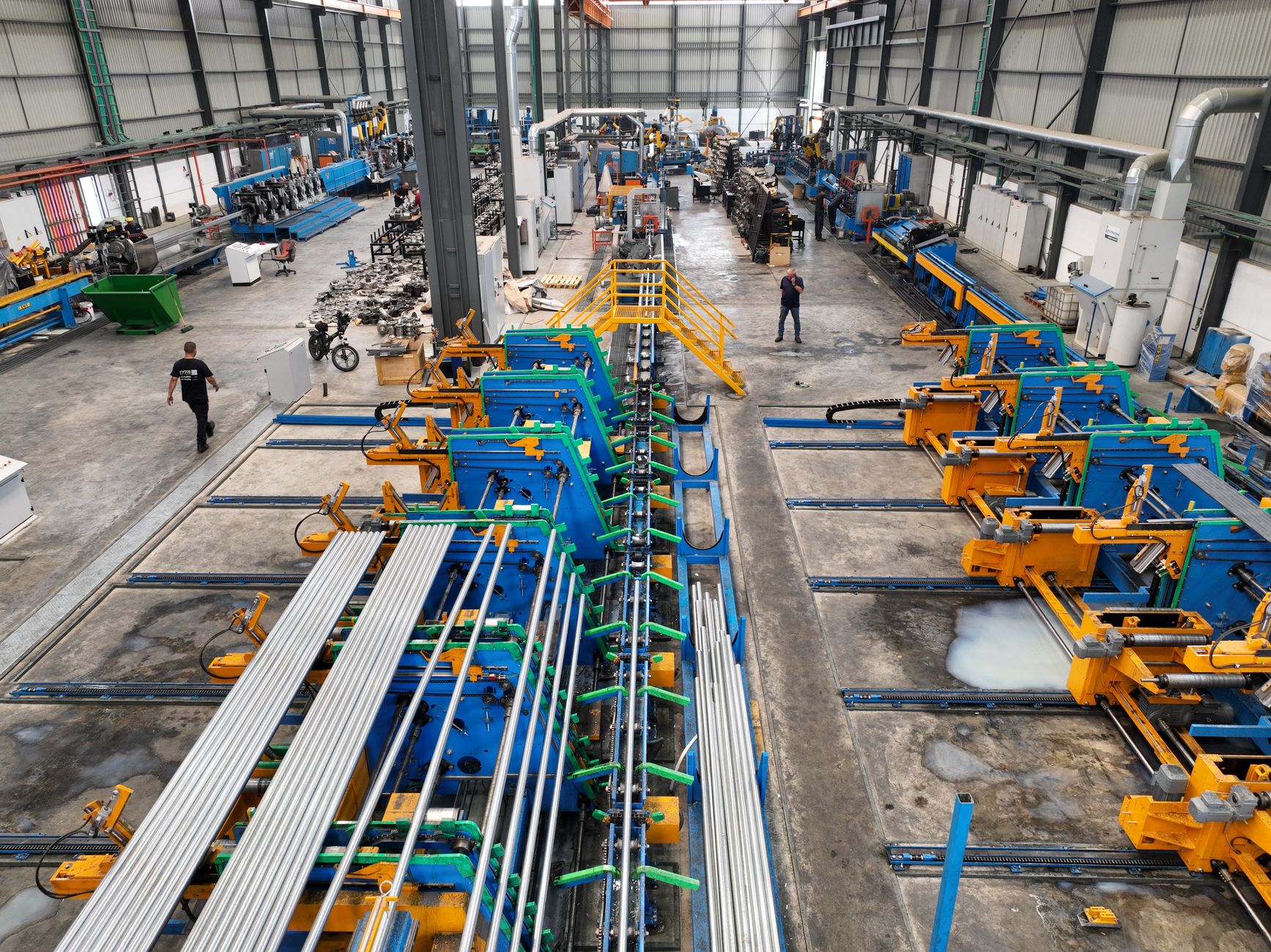
    Automated production line showing the kind of critical equipment RCM analysis targets

    Running RCM well is a facilitation skill as much as a technical one —
    someone has to keep a cross-functional team working through all seven
    questions honestly, including saying “run to failure” out loud when that’s
    the right answer.

    SCMEP offers Reliability Centered Maintenance training as part of a
    broader maintenance and reliability
    curriculum
    that also covers maintenance planning and scheduling,
    reliability engineering, and predictive maintenance strategies. As a
    NIST Manufacturing Extension Partnership affiliate serving
    South Carolina manufacturers since 1989
    , we scope training to real
    plant equipment, not a generic case study.

    Technician performing precision equipment testing

    If you’re deciding whether RCM makes sense for your plant, or want to
    scope a pilot to a handful of critical assets rather than everything at
    once, you can browse the maintenance
    and reliability training catalog
    or email the training team.

    RCM’s output is only as good as the maintenance plan behind it — see our
    related article on the
    difference between maintenance planning and scheduling
    for what happens
    after the analysis is done.

    Frequently asked questions

    What is reliability centered maintenance?

    Reliability centered maintenance (RCM) is a structured process for deciding the right maintenance strategy for each individual asset, based on how it actually fails and what happens when it does, rather than applying one blanket schedule to everything.

    What are the 7 questions of RCM?

    What are the asset’s functions, how can it fail, what causes each failure, what happens when it fails, how much does that matter, what proactive task can prevent or catch it, and — if no task works — is planned run-to-failure the right call.

    Is RCM worth it for a smaller plant?

    Usually not for every asset. Full RCM is resource-intensive — often four or five people for about a week per system. It earns its cost on genuinely critical or safety-relevant equipment; for most other assets, an experienced maintenance team’s existing judgment is close enough that a full formal analysis is overkill.

    How long does an RCM analysis take?

    A focused pilot on one critical system typically takes three to six months from kickoff to a working plan. A full plant-wide rollout is closer to one to two years. Basic training for the team running it is usually 40 to 80 hours.

    What’s the difference between RCM and preventive maintenance?

    Preventive maintenance applies a calendar or usage-based schedule to an asset. RCM is the analysis that decides whether a calendar schedule is even the right approach for that specific asset, or whether predictive monitoring, run-to-failure, or something else fits its actual failure pattern better.

  • PLC Training for Manufacturing: A Beginner’s Guide

    PLC Training for Manufacturing: A Beginner’s Guide

    Almost every machine on a modern production floor is run by a PLC. Almost
    no one who works around those machines was ever taught what one actually is —
    they just learn which buttons matter through repetition.

    PLC training closes that gap. This guide covers what a PLC does, who
    actually needs to learn this, how the real learning paths compare, and how
    long it honestly takes — written for people evaluating this for themselves or
    for their team, not for people selling a course.

    What is a PLC, actually?

    A PLC — programmable logic controller — is an industrial computer that
    reads inputs from sensors and switches, runs a set of logic against them, and
    drives outputs like motors, valves and lights. It’s the thing deciding when a
    conveyor starts, when a guard has to stay locked, and when a fault should
    stop the line.

    Compact industrial controller mounted inside a control cabinet with wiring

    Most PLCs are programmed in ladder logic, a visual
    language built to look like the relay wiring diagrams it replaced — which is
    exactly why it’s approachable for someone with an electrical or maintenance
    background, even with no software experience at all.

    How is a PLC different from a regular computer?

    A PLC runs one program in a continuous loop — read inputs, evaluate
    logic, update outputs, repeat, dozens of times a second — instead of running
    many applications at once like a desktop computer does. That single-purpose
    design is what makes it reliable enough to sit on a factory floor for
    decades: no operating system updates, no background processes, nothing
    competing for its attention.

    A microcontroller is closer in spirit — also single-purpose — but a PLC
    adds industrial-grade housing, hot-swappable I/O modules, and a programming
    environment built for electricians rather than software developers. That
    combination, not raw processing power, is the actual reason plants standardize
    on PLCs instead of general-purpose computers or bare microcontrollers.

    Who actually needs PLC training?

    “Learn PLCs” means something different depending on the job:

    • Operators and technicians mainly need to read a
      program, clear faults, and understand what the logic is doing — not write
      it from scratch.
    • Maintenance staff need to troubleshoot: force an
      input, trace a rung, tell a wiring fault from a logic fault.
    • Controls engineers and integrators need to write and
      modify programs, and usually go deep on one or two platforms.
    • Plant managers evaluating training for their team need
      to know which of the above their people actually are, because the right
      course for an integrator is overkill for an operator.

    Most of the free content online is written for the third group. Most of
    the actual need on a manufacturing floor is in the first two — which lines up
    with how the U.S. Department of Labor’s
    occupational profile for electro-mechanical and mechatronics technicians
    describes the role: PLC software is listed as a core technology skill
    alongside hands-on troubleshooting, not standalone programming.

    Free self-study vs. paid courses vs. a formal certificate

    There are three real paths into this, and they trade off differently:

    PLC learning paths compared
    Path Cost Time Hands-on access Best fit
    Free self-study $0, or the cost of a simulator license Self-paced — weeks to months Usually simulator only, unless you have access to real hardware Motivated self-starters with basic electrical grounding
    Paid online course Roughly $50–$500 Weeks, self-paced Varies — some include simulator labs, few include real hardware People who want structure without a full program commitment
    Formal certificate program Roughly $1,500–$3,000+ Several months, often part-time Usually real hardware in a lab setting Career-changers, or employers investing in a controls track
    Engineer testing wiring on an industrial rig using a laptop

    The honest gap in all three: almost none of them are built around
    your plant’s actual equipment. A simulator or a generic training rig
    teaches the concepts; it doesn’t teach your line.

    How long does it actually take to learn PLC programming?

    Basic ladder logic — reading a rung, understanding inputs and outputs,
    forcing a bit to troubleshoot — is genuinely learnable in about a week of
    focused effort for someone with electrical fundamentals already. That’s
    enough to be useful on a floor.

    Job-ready competence for someone writing and modifying programs
    independently is a different timeline — realistically three to twelve
    months, depending on prior electrical background and how much real hardware
    time they get. Watching videos without touching a PLC or simulator stretches
    that timeline significantly; hands-on practice is what actually moves it.

    Getting started without wasting six months

    Close-up of DIN-rail mounted electrical protection devices inside an industrial control panel

    A few things practitioners consistently learn the hard way:

    • Pick one platform and go deep, rather than sampling five.
      The core logic concepts transfer between brands; the software environment
      doesn’t, and switching platforms every few weeks resets your progress.
    • A simulator beats a video every time. You can watch a
      hundred tutorials and still not be able to troubleshoot a real fault. Force
      yourself to build and break small programs.
    • A degree is not the gate. Most working PLC
      technicians came up through electrical trades or maintenance, not a
      four-year engineering program.
    • Which brand to start on matters less than starting.
      The most common regional platform in your area is usually the practical
      choice, simply because that’s what you’ll actually encounter on the job.
    Industrial robot arms on an automated assembly line

    Where this fits in South Carolina manufacturing

    Automated conveyor and control system on a manufacturing production line

    PLC and controls skills sit alongside the broader automation and Industry
    4.0 shift South Carolina manufacturers are working through — robotics,
    industrial IoT, and the digital tools layered on top of the equipment PLCs
    already run. If your team is building capability in this area, SCMEP’s
    automation and robotics training and
    Industry 4.0 and digital transformation training
    cover the adjacent ground, and our
    Lean and continuous improvement curriculum
    is often where structured problem solving for equipment issues — including
    A3 problem solving — actually gets applied
    on the floor.

    A dedicated PLC fundamentals course isn’t in our published catalog today.
    As a NIST Manufacturing Extension Partnership affiliate
    serving South Carolina manufacturers since 1989
    , if your plant needs this
    built into a training plan, email the
    training team
    — we can talk through what exists locally and where SCMEP
    can help.

    Frequently asked questions

    What is a PLC in simple terms?

    A programmable logic controller is an industrial computer that reads sensor and switch inputs, runs logic against them, and controls outputs like motors and valves — the device deciding when equipment starts, stops, or faults.

    Is PLC programming hard to learn?

    Basic ladder logic is approachable, especially for anyone with electrical or maintenance experience — many people grasp the fundamentals in about a week of focused practice. Job-ready independent programming takes longer, typically three to twelve months of real hands-on work.

    Do I need a degree to work with PLCs?

    No. Most working PLC technicians come from electrical trades or maintenance backgrounds rather than a four-year engineering degree. A degree matters more for controls engineering roles that design systems from scratch.

    Which PLC brand should I learn first?

    The core logic concepts transfer between brands, so the most practical choice is usually whichever platform is most common in your region or industry — that’s what you’ll actually encounter on the job. Depth on one platform beats shallow exposure to several.

    What’s the difference between free, paid, and certificate PLC training?

    Free self-study costs nothing but usually means simulator-only practice and no structure. Paid online courses add structure for a moderate cost. Formal certificate programs cost the most and take the longest, but typically include real hardware access and a recognized credential.

  • A3 Problem Solving: The Complete Guide for Manufacturers

    A3 Problem Solving: The Complete Guide for Manufacturers

    An A3 is one page. That constraint is the entire point — it forces a team
    to separate the signal from the noise of a manufacturing problem before they’re
    allowed to propose a fix.

    Most plants already have a version of this instinct — someone grabs a
    whiteboard and starts asking why. A3 problem solving gives that instinct a
    structure, so it produces the same quality of thinking whether your best
    engineer runs it or someone does it for the first time.

    This guide covers what an A3 is, its seven steps, how it differs from 8D
    and DMAIC, and the mistakes that turn a real A3 into paperwork.

    What is A3 problem solving?

    A3 problem solving is a structured, one-page method for working through a
    manufacturing problem — developed at Toyota and named for the paper size it
    was originally written on (A3, roughly 11 x 17 inches). It captures the
    background, current condition, root cause analysis, proposed countermeasures,
    and a plan to check whether they worked — all on one sheet, built around the
    plan-do-check-act cycle.

    The one-page limit isn’t a formatting preference. It forces the team to
    cut a problem down to what matters — real current-state data, verified root
    cause evidence, and the countermeasures most likely to work — instead of a
    running list of everything that might be wrong.

    The 7 steps of an A3 report

    Most A3 templates follow some version of the same seven-step logic, even
    when the boxes on the page are arranged differently:

    The 7 steps of a standard A3 problem-solving report
    Step What happens Key question
    1. Background State why this problem matters to the business, not just the line Why are we spending time on this?
    2. Current condition Show the process as it actually runs today, with real data — not the process as documented What is actually happening?
    3. Goal State the target condition in specific, measurable terms What does “fixed” look like?
    4. Root cause analysis Work back from the problem using 5 Why or a fishbone diagram until you reach a cause you can act on Why is this actually happening?
    5. Countermeasures Propose changes tied directly to the root cause — not a general improvement list What will we change, and why will it work?
    6. Implementation plan Assign owners and dates for each countermeasure Who is doing what, by when?
    7. Follow-up Check the results against the goal, and standardize what worked Did it actually work — and how do we know?
    Press brake operator working from job tickets pinned to the machine, showing where problems actually start

    Step 4 is where most A3s succeed or fail. It’s tempting to write down the
    first plausible cause and move on — but a root cause you haven’t verified
    against real data is just a guess with better formatting.

    A3 vs 8D vs DMAIC: which do you use when?

    These three methods get confused constantly, reasonably so — all three
    involve root cause analysis and a countermeasure plan. The real differences
    are scale, formality, and what kind of problem each is built for.

    A3, 8D and DMAIC compared
    Dimension A3 8D DMAIC
    Best suited to Day-to-day operational problems, continuous improvement Customer complaints and formal corrective action, especially in automotive/aerospace supply chains Complex, data-heavy problems with an unclear or multi-variable cause
    Format One page Eight numbered disciplines, usually several pages Five project phases, often weeks of analysis
    Typical owner A team lead or engineer, close to the process A cross-functional team, often supplier-facing A trained Six Sigma practitioner
    Includes containment Not formally — assumed to happen first Yes — Discipline 3 is a required immediate containment step Not formally — DMAIC assumes the process is stable enough to measure
    Time to complete Days to a couple of weeks Days to a couple of weeks Weeks to months
    Where it comes from Toyota Production System Ford, originally for supplier quality issues Six Sigma

    A simple way to hold the distinction: 8D is what a customer asks for once
    something has gone wrong and needs a documented, auditable response. DMAIC is
    for a problem so tangled it needs weeks of data collection before anyone
    agrees on the root cause. A3 covers everything in between — most problems, in
    most plants.

    5 Why and fishbone diagrams aren’t competitors to any of these three —
    they’re techniques used inside Step 4 of an A3, or the equivalent
    root-cause step in 8D and DMAIC. It’s not A3 vs. 5 Why; it’s which framework
    you wrap the 5 Why analysis in.

    Assembly line workers with andon status lights signaling process condition overhead

    Common mistakes that turn an A3 into a memo

    An A3-shaped document isn’t the same as A3 thinking. The format is easy to
    copy; the discipline behind it isn’t. The most common failures:

    • Skipping straight to countermeasures. If “current
      condition” gets filled in from memory instead of a walk to the floor, the
      whole report rests on an assumption.
    • Treating the first cause as the root cause. “The
      operator made a mistake” is rarely a root cause — usually it’s where the
      analysis stopped, not where it should have started.
    • No real owner or date on countermeasures. A
      countermeasure without a name and a deadline is a suggestion, not a plan.
    • No follow-up step. Without checking results against the
      goal, there’s no way to know if the countermeasure worked or the problem
      just moved.
    • Writing it alone. A3 is built through conversation with
      the people who run the process — a report written solo at a desk usually
      reflects one person’s theory, not the floor’s reality.

    Why A3 thinking matters beyond the paper

    Wide view of an automated manufacturing production line where structured problem solving gets applied

    The A3 is a communication tool as much as a problem-solving one. Because
    it’s one page, a manager can review it in minutes and a team can revisit it
    months later and still understand why a decision was made. A one-page report
    gets read; an eight-page report gets filed.

    For a well-sourced comparison of when to reach for A3 versus 8D, the
    American Society for Quality’s breakdown of A3 and 8D reporting
    is a solid, vendor-neutral reference.

    Where training fits

    Two manufacturing workers reviewing a work order together on the shop floor

    A3 thinking is learnable, but it’s rarely taught well by osmosis. Most
    people’s first exposure is a blank template and a due date — which produces
    exactly the memo-shaped documents described above.

    SCMEP has delivered A3 problem-solving workshops to South Carolina
    manufacturers as part of a broader
    Lean and continuous improvement training curriculum
    that also covers standard work and multi-day Kaizen events. As a
    NIST Manufacturing Extension Partnership affiliate serving South Carolina manufacturers since 1989,
    our focus is building this capability in your people, not doing the
    problem-solving for you.

    Machine shop operator running a tube-bending machine on the shop floor

    If your team fills out A3 templates without the thinking behind them, or
    you want to build the habit in people who’ve never run one, you can
    browse the Lean and continuous improvement training catalog
    or email the training team.

    A3 discipline pairs directly with daily management on the floor — see our
    related article on
    how leader standard work keeps a team’s daily routine from going reactive,
    which is often where an A3’s countermeasures get sustained or quietly
    dropped.

    Frequently asked questions

    What is A3 problem solving?

    A3 problem solving is a structured, one-page method developed at Toyota for working through a manufacturing problem — covering the background, current condition, root cause, countermeasures and follow-up plan, built around the plan-do-check-act cycle.

    What are the 7 steps of A3 problem solving?

    Background, current condition, goal, root cause analysis, countermeasures, implementation plan, and follow-up. Some templates combine or relabel a step, but the underlying logic — understand, then act, then check — stays the same.

    What is the difference between A3 and 8D?

    A3 is a one-page format typically used for internal operational problems and continuous improvement. 8D is a more formal eight-step process, usually required for customer complaints or supplier corrective action, and includes a mandatory immediate-containment step that A3 does not formally require.

    Is A3 the same as 5 Why or a fishbone diagram?

    No. 5 Why and fishbone diagrams are root-cause analysis techniques used inside an A3’s root-cause step — not competing frameworks. An A3 is the overall one-page report; 5 Why or a fishbone diagram is one tool you might use to fill in its root-cause section.

    Who should fill out an A3 report?

    Whoever owns the process, working with the people who actually run it day to day — not a manager writing it alone from their office. A3 is meant to be built through conversation and a walk to the floor, not filled in from memory.

  • What Is Leader Standard Work? A Manufacturer’s Guide

    What Is Leader Standard Work? A Manufacturer’s Guide

    Leader standard work is the part of a lean program everyone
    agrees with and almost nobody sustains. The checklist gets built, runs for six
    weeks, then quietly becomes a clipboard nobody picks up.

    This article covers what leader standard work is, what it looks like at
    different levels of a plant, and — more usefully — the specific ways it dies.

    What is leader standard work?

    Leader standard work (LSW) is the set of recurring activities a leader
    performs on a fixed cadence — daily, weekly, monthly — to make sure the process
    runs as designed and keeps improving.

    If standard work defines how the operator does the job, LSW defines how the
    leader does theirs — same principle, one level up.

    It is sometimes called “kaizen for management,” and the description fits.
    The intent is not to give managers a to-do list — it is to shift the manager
    from being the plant’s primary problem-solver to building problem-solving
    capability in the people who do the work.

    That distinction matters more than any template. A leader who uses LSW to
    check up on people has built a surveillance routine. A leader who uses it to
    find out where the process is failing them has built an improvement engine.
    The checklist looks identical either way.

    Close-up of a hand writing on a clipboard checklist at a desk

    Leader standard work vs standard work

    These get conflated constantly, which causes real confusion when a plant
    rolls out both at once.

    How leader standard work differs from operator standard work
    Dimension Standard work Leader standard work
    Who it is for The person performing the process The person accountable for the process
    Defines The best known way to do a task The recurring routine that sustains and improves it
    Cadence Every cycle Daily, weekly, monthly — by leader level
    Measured by Adherence and takt Whether the routine happened, and what changed as a result
    Fails as A document nobody follows A checklist nobody completes honestly
    Owned by The team doing the work The leader — it cannot be delegated

    What leader standard work looks like by level

    The most common mistake is giving every leader the same LSW. A team leader
    and a plant manager should not run the same routine — cadence and altitude both
    change as you go up.

    Typical leader standard work by leadership level
    Level Typical cadence Focus of the routine
    Team leader Mostly hourly and daily; a large share of the shift Confirming the process is running to standard; responding to
    abnormalities as they surface; first-line problem containment
    Supervisor Daily, with weekly elements Tiered meetings, process confirmation, coaching team leaders,
    escalating what cannot be solved at the line
    Value stream / area manager Weekly, with some daily Gemba walks, reviewing improvement work, removing the barriers
    supervisors escalate
    Plant manager Weekly and monthly Reviewing the system rather than the numbers; confirming the tiers
    below are actually functioning; strategy deployment
    Manufacturing team standing together during a shift briefing

    The pattern: the further up you go, the less time goes on the process itself
    and the more on whether the layer below has what it needs.

    Why leader standard work fails

    This is the section most articles leave out — and the reason most LSW
    programs are on their second or third attempt.

    1. It gets treated as a program, not a process

    LSW is launched with a kickoff, a template, and a deadline. But the value is
    not in the checklist — it is in the loop of building it, running it, finding it
    wrong, and changing it. A program has an end date. A process does not.

    2. Pencil-whipping

    The single most common failure. The manager gets pulled into a breakdown,
    misses the checks, and completes the whole sheet at 4pm from memory. Now you
    have a document that says the process is healthy and a process nobody looked
    at. This is worse than having no LSW, because it manufactures false confidence.

    Worker holding a clipboard in a materials workshop

    3. Piling it onto already-overloaded supervisors

    If a supervisor is firefighting for nine hours a day, adding a routine does
    not create discipline — it creates a new thing to fail at. LSW usually has to
    replace reactive work, not sit on top of it. Something has to be taken
    away first, and that is a leadership decision, not a lean one.

    Experienced worker reviewing documents on the production floor with a colleague nearby

    4. Going too big, too fast

    Four tiers, every level, plant-wide, from week one. It collapses under its
    own weight. One leader, one level, one real problem is slower on paper and far
    faster in practice.

    5. Nobody above them is doing it

    This is the one that quietly kills more LSW than all the others combined. If
    a supervisor’s LSW is audited by a manager who has no LSW of their own, the
    message is unmistakable: this is something done to the front line, not
    something the organization believes in. LSW has to start at the top or it reads
    as compliance theatre.

    Manager checking equipment controls while walking the production floor

    6. It becomes surveillance

    If the routine is used to catch people out, people optimize for looking good
    during the walk. You get clean audits and no information.

    Assembly line workers operating production equipment

    How to start without it dying

    1. Start at the top. If the plant manager will not do their
      own LSW, do not roll it out below them.
    2. Take something away. Identify what the routine replaces.
      If nothing, expect it to fail.
    3. Make it short enough to be honest. A three-item routine
      done truthfully beats a twenty-item routine pencil-whipped.
    4. Review the routine itself monthly. Items that never surface
      anything should be removed. If nothing ever changes, it is not working.

    The Lean Enterprise Institute’s
    lexicon entry on leader standard work
    is a good vendor-neutral reference on where the practice sits in the wider lean
    management system.

    Where training fits

    Leader standard work is a behavior, not a document, which makes it hard to
    learn from a template download. Most supervisors were promoted for being
    excellent at the technical job — not for coaching, process confirmation, or
    holding a routine when the plant is on fire.

    SCMEP delivers Leader Standard Work as part of a leadership and workforce
    curriculum built for manufacturers. As a
    NIST Manufacturing Extension Partnership affiliate working with South Carolina manufacturers since 1989,
    we teach it in the context of the shop floor rather than the classroom. You can
    browse the manufacturing leadership and workforce training catalog,
    see
    structured learning paths that build lean capability end to end,
    or email the training team.

    To watch LSW working in other plants, join
    OpExChange, our peer network for operational excellence in South Carolina
    — plant tours and benchmarking discussions with manufacturers across the state.
    Related reading:
    the difference between maintenance planning and scheduling,
    and how A3 problem solving turns a root cause into a verified fix.

    Frequently asked questions

    What is leader standard work in simple terms?

    It is the set of recurring activities a leader does on a fixed cadence — daily, weekly or monthly — to confirm the process is running as designed and to keep improving it. Where standard work defines how an operator does the job, leader standard work defines how the leader does theirs.

    What is the difference between standard work and leader standard work?

    Standard work is for the person performing a task and defines the best known way to do it. Leader standard work is for the person accountable for the process and defines the routine that sustains and improves it. Standard work repeats every cycle; leader standard work runs daily, weekly or monthly depending on the leader’s level.

    What should be on a leader standard work checklist?

    It depends entirely on level. A team leader’s routine is mostly hourly and daily process confirmation. A plant manager’s is weekly and monthly, and focuses on whether the tiers below are functioning. Copying another plant’s template is the most common way to end up with a routine that surfaces nothing.

    Why does leader standard work fail so often?

    The most common causes are pencil-whipping (completing the checklist from memory), adding it on top of already-overloaded supervisors instead of replacing reactive work, rolling out every tier at once, and — the big one — leaders above not doing their own. If the manager auditing the routine has no routine, it reads as compliance theatre.

    How long before leader standard work shows results?

    Expect it to feel bureaucratic before it feels useful. The turn comes when the routine starts surfacing real problems that get fixed — which is also the point most plants abandon it. Pruning the routine monthly shortens that gap.


  • Maintenance Planning vs Scheduling: What’s the Difference?

    Maintenance Planning vs Scheduling: What’s the Difference?

    Most plants do not have a maintenance planning problem. They have a planning-and-scheduling problem that has been quietly collapsed into one job, handed to one overloaded person, and then blamed for missed schedules.

    Planning and scheduling are two different functions. They need different skills, run on different time horizons, and answer different questions. When one person does both — which is common — the urgent work of scheduling always eats the important work of planning.

    This article explains the difference, what each role actually does, and how to decide whether you need one person or two.

    Maintenance planning vs scheduling: the short answer

    The distinction is easiest to hold onto as two questions:

    • Planning answers what and how. What is the scope of this job, what parts and tools does it need, how many labor hours, what safety steps?
    • Scheduling answers when and who. Which day does this work happen, which technician does it, and does the production line have to be down for it?

    Planning is a technical function. Scheduling is a logistics function. And the order is not negotiable — you cannot schedule work that has not been planned, because you have no idea how long it will take or whether the parts are on site.

    Maintenance planning vs maintenance scheduling at a glance
    Dimension Maintenance planning Maintenance scheduling
    Core question What needs doing, and how? When does it happen, and who does it?
    Function type Technical Logistics and coordination
    Main output A complete work pack — scope, parts, tools, hours, safety steps A committed weekly schedule matched to available labor
    Time horizon Ahead of the work — often weeks out The coming week, refined daily
    Key relationships Stores, procurement, engineering Production, supervisors, technicians
    Fails when Work packs are incomplete, so techs go hunting for parts Schedule is built on guesses, so it breaks by Tuesday
    Sequence Always first Always second
    Toolbox of screwdrivers staged for a planned maintenance job

    What a maintenance planner actually does

    The planner’s job is to make sure that when a technician picks up a work order, everything needed to finish it is already sorted. That is the whole point of the role.

    In practice, that means:

    1. Scoping the job. What is the actual failure or task, and what does “done” look like?
    2. Identifying parts and materials. What is needed, is it in stores, and if not, how long will it take to arrive?
    3. Estimating labor. How many people, how many hours, what trades?
    4. Specifying tools and equipment. Including anything that has to be booked, like a crane or a contractor.
    5. Building the safety and permit requirements into the pack before the job is released.
    6. Improving the job plan after the work is done, using feedback from the people who did it.
    Two staff reviewing a clipboard while walking through warehouse parts shelving

    That last step is the one plants skip, and it is the one that compounds. A job plan that gets a little better every time it runs is the difference between a planning function and a filing function.

    What a maintenance scheduler actually does

    The scheduler takes planned, ready-to-go work and turns it into a commitment that production has agreed to.

    • Matching planned work to available labor hours for the coming week
    • Negotiating equipment access windows with production
    • Sequencing jobs so that related work happens in the same outage
    • Protecting the schedule from low-priority interruptions
    • Reporting schedule compliance — what was committed vs what got done
    Weekly planning board with sticky notes assigning tasks for the week

    Scheduling is fundamentally a negotiation with production. That is why it needs different skills from planning. A brilliant technical planner who cannot hold a firm line with a production manager will produce a schedule that evaporates every week.

    Do you need one person or two?

    This is the real question behind most searches on this topic, and most articles dodge it. Here is a straight answer.

    Combined planner-scheduler vs separated roles
    Consideration One combined role Two separate roles
    Best suited to Smaller sites; roughly under ~15 technicians Larger sites, or multi-line plants with tight uptime demands
    Main advantage One point of contact; no handoff to get wrong Each function gets protected time and the right skill set
    Main risk Scheduling is urgent and planning is important — urgent wins, and planning quietly stops happening Requires a genuine handoff discipline, or work packs get scheduled before they are ready
    Typical failure The “planner” becomes a parts-chaser and expeditor Planner and scheduler stop talking; schedule fills with unready work
    Skills needed Technical depth and negotiation — rare in one person Technical depth (planner); coordination and influence (scheduler)
    Production floor staff conferring over a work order

    If you take one thing from this table: the most common failure mode of the combined role is that the planner becomes an expeditor. They spend the day chasing parts for work that is already in progress, which is reactive work by definition — the exact thing planning exists to prevent.

    If that describes your planner’s week, you do not have a planning function. You have a very expensive parts runner, and no amount of software will fix it.

    Why this is worth getting right

    Technician performing planned maintenance with tools staged in advance

    Maintenance planning and scheduling is widely regarded as one of the highest- return improvements available in a maintenance organization, precisely because it costs little and touches everything: wrench time, downtime, parts spend, and the credibility of the maintenance department with production.

    The mechanism is simple. Every hour a technician spends looking for a part, waiting for a permit, or finding out the job is bigger than the work order said, is an hour of capacity you already paid for and did not get. Planning converts those hours back into work.

    For a deeper technical treatment of the discipline, ReliablePlant’s overview of maintenance planning and scheduling is a solid, vendor-neutral starting point.

    Where training fits

    Planning and scheduling are learnable skills, and they are rarely learned by accident. Most planners are promoted from the tools because they were good technicians — which is a completely different skill from building a work pack or defending a weekly schedule.

    SCMEP has delivered maintenance planning and scheduling training to South Carolina manufacturers as part of a broader maintenance and reliability curriculum that also covers reliability centered maintenance and predictive maintenance strategies. As a NIST Manufacturing Extension Partnership affiliate serving South Carolina manufacturers since 1989, our focus is the plant, not the software.

    If you are working out whether your site needs a planner, a scheduler, or both, or you want to build the capability in people you already have, you can browse the manufacturing maintenance and reliability training catalog or email the training team.

    Engineer reviewing a job plan document inside an industrial facility

    Planning is also a natural companion to leadership discipline on the floor — see our related article on how leader standard work keeps daily management from going reactive.

    Frequently asked questions

    Is maintenance planning the same as scheduling?

    No. Planning defines what a job needs — scope, parts, tools, labor hours and safety steps. Scheduling decides when the job happens and who does it. Planning always comes first, because you cannot schedule work reliably without knowing how long it takes or whether the parts are on site.

    Should the same person do both planning and scheduling?

    At smaller sites, often yes — roughly under 15 technicians, one person can carry both. The risk is that scheduling is urgent while planning is merely important, so planning gets squeezed out and the planner drifts into chasing parts. Larger or higher-uptime plants generally get better results by separating the roles.

    What does a maintenance planner do day to day?

    Scopes upcoming jobs, identifies the parts and tools each one needs, estimates labor hours, builds in safety and permit requirements, and improves job plans using feedback from the technicians who did the work. A planner should be working ahead of the work, not inside it.

    Do I need a CMMS before I can plan maintenance?

    No. A CMMS helps you scale and measure a planning process, but it does not create one. Software applied to an undefined process produces faster disorder. Define the planning and scheduling functions first, then choose a tool to support them.

    How do I measure whether planning is working?

    Two starting measures: schedule compliance (what you committed to versus what actually got done) and wrench time (the share of a technician’s day spent doing the work rather than looking for parts, waiting for permits, or travelling). Both should improve as planning matures.